All Intelligence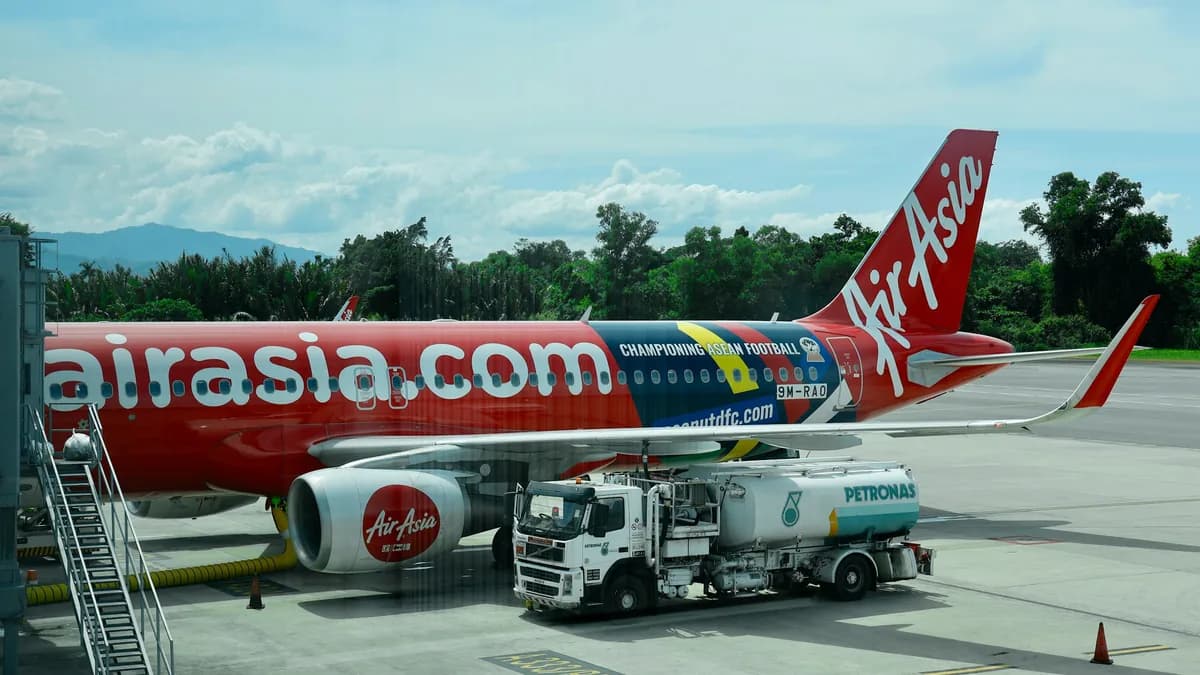
Supply Volume and Delivered Value
Market IntelligencePublished January 26, 2026•Updated May 4, 2026•6 min
Global Sustainable Aviation Fuel (SAF) Market Outlook to 2032
Global SAF supply grows from 1.5 Mt in 2024 to 22 Mt by 2032 (35% CAGR) as ReFuelEU, the UK SAF Mandate, and US 45Z reshape demand. Feedstock and e-SAF capex constraints will gate compliance through 2028.
Key Takeaways
- 01
SAF physical supply grows from 1.5 Mt in 2024 to 22 Mt by 2032 at 35% CAGR; delivered-supply value rises from US$2.5 billion to US$29 billion over the same window.
- 02
Mandate compliance (ReFuelEU, UK SAF Mandate, US 45Z) drives 75% of incremental 2030 demand, replacing voluntary corporate offtake as the structural driver.
- 03
HEFA supplies over 90% of 2025 production but is feedstock-constrained; ATJ, FT, and PtL e-SAF must scale from under 10% to 35-40% by 2030.
- 04
SAF delivered cost averaged US$1,800/tonne in 2025 versus US$850/tonne for fossil jet, a 2.1-fold premium rising to 4.2-fold once EU compliance fees apply.
- 05
Top 5 producers control 64% of 2025 supply; Neste alone supplied 38%. Concentration persists through 2028 before ATJ and PtL diversification erodes the lead.
Executive Summary
Sustainable aviation fuel is moving from voluntary pilot to mandate-driven scale. Global SAF physical supply grows from 1.5 Mt in 2024 to 22 Mt by 2032 at 35% CAGR, with delivered-supply value rising from US$2.5 billion to US$29 billion over the same window.
Three forces drive the trajectory. ReFuelEU mandates (2% from 2025, 6% by 2030, 70% by 2050), the UK SAF Mandate (2% from 2025, 22% by 2040), and the US Section 45Z Clean Fuel Production Credit (US$1.75/gal max for SAF) collectively underwrite 75% of incremental 2030 demand. HEFA supplies over 90% of 2025 production but is structurally feedstock-constrained; ATJ, FT, and PtL/e-SAF must scale from under 10% in 2025 to 35-40% by 2030 for mandate compliance to be achievable. And the cost premium remains the binding adoption constraint outside mandated markets, with SAF at US$1,800/tonne versus US$850/tonne fossil jet in 2025.
Market Overview
SAF is a drop-in jet fuel produced from renewable feedstocks (waste oils, agricultural residues, municipal solid waste, biomass, captured CO₂ and renewable hydrogen). The category includes seven approved ASTM-certified production pathways, with HEFA (hydroprocessed esters and fatty acids), ATJ (alcohol-to-jet), FT (Fischer-Tropsch), and PtL/e-SAF (power-to-liquids using DAC CO₂ and green hydrogen) as the structurally important ones.
The category sits at the intersection of three macroeconomic forces. Aviation accounts for approximately 2.5% of global CO₂ emissions and is regulated under CORSIA (mandatory Phase 2 from January 2027) and regional mandates (ReFuelEU, UK, FAA SAF Grand Challenge). Feedstock economics are structural: HEFA hits the ceiling around 4-6 Mt/year globally before competing with biodiesel for waste oils. And the cost gap to fossil jet, 2.1-fold in 2025 and 4.2-fold landed cost once EU compliance fees apply, gates voluntary corporate demand.
Geopolitically, North America produces approximately 50% of 2025 supply but represents only 32% of 2030 demand. The supply-demand asymmetry creates a structural cross-border SAF flow that EU airlines depend on for compliance. China's domestic SAF strategy is emerging but oriented toward CORSIA compliance for its own carriers.
Market Size and Growth Outlook
Global SAF Physical Supply
Mt SAF, 2020-2032
| Label | Value (Mt) |
|---|---|
| 2020 | 0.05 Mt |
| 2022 | 0.3 Mt |
| 2024 | 1.5 Mt |
| 2026 | 3.5 Mt |
| 2028 | 7.5 Mt |
| 2030 | 14 Mt |
| 2032 | 22 Mt |
| Year | Volume (Mt) | Delivered Value (US$B) |
|---|---|---|
| 2024 | 1.5 | 2.5 |
| 2026 | 3.5 | 5.5 |
| 2028 | 7.5 | 11.0 |
| 2030 | 14.0 | 19.5 |
| 2032 | 22.0 | 29.0 |
Source: Triangulated IATA, IEA, ICAO CORSIA tracking, named-producer disclosures.
The 2024-28 phase compounds at 50% CAGR as the EU 2% mandate from 2025 and the UK SAF Mandate force airline procurement. From 2028 onward, growth moderates to 30% as HEFA hits the global feedstock ceiling and incremental supply must come from ATJ, FT, and PtL/e-SAF capacity that requires multi-year capex cycles. The 2030 EU 6% target is achievable only if e-SAF scales to 1-2 Mt; the 2050 70% target requires PtL e-SAF to dominate supply.
Market Segmentation
By Production Pathway
By Production Pathway (2025 share)
- HEFA (waste oils, fats, animal tallow)91.0%
- ATJ (alcohol-to-jet, ethanol-based)4.0%
- FT (Fischer-Tropsch from biomass)3.0%
- PtL e-SAF (DAC CO₂ and green H₂)1.0%
- Other (co-processing, niche)1.0%
| Label | Value (%) |
|---|---|
| HEFA (waste oils, fats, animal tallow) | 91% |
| ATJ (alcohol-to-jet, ethanol-based) | 4% |
| FT (Fischer-Tropsch from biomass) | 3% |
| PtL e-SAF (DAC CO₂ and green H₂) | 1% |
| Other (co-processing, niche) | 1% |
HEFA dominates 2025 production because it uses existing refinery infrastructure with modest capex retrofits. The structural constraint is feedstock: waste oils, used cooking oil, and animal tallow are limited to approximately 4-6 Mt/year globally before competing with biodiesel and renewable diesel. PtL e-SAF is the only pathway with unlimited theoretical scale (atmospheric CO₂ and renewable hydrogen) but commercial cost remains four to six times HEFA. ATJ and FT scale from biomass and ethanol feedstocks at lower cost than e-SAF but with their own feedstock-availability ceilings.
By Buyer
By Buyer (2025 SAF retail offtake)
- Mandated airlines (EU, UK)48.0%
- Corporate book-and-claim and SAFc22.0%
- US airlines (45Z-supported)18.0%
- CORSIA First Phase voluntary7.0%
- Other (military, charter, freight)5.0%
| Label | Value (%) |
|---|---|
| Mandated airlines (EU, UK) | 48% |
| Corporate book-and-claim and SAFc | 22% |
| US airlines (45Z-supported) | 18% |
| CORSIA First Phase voluntary | 7% |
| Other (military, charter, freight) | 5% |
Mandated airlines at 48% reflects the structural shift from voluntary corporate demand to compliance-driven procurement. EU and UK airlines source SAF to meet ReFuelEU and UK SAF Mandate quotas. Corporate book-and-claim and SAF certificates (SAFc) at 22% serve scope-3 corporate net-zero claims; this segment is structurally exposed to integrity-tier scrutiny similar to VCM credits.
By Region
By Production Region (2025)
| Label | Value (%) |
|---|---|
| North America (US, Canada) | 50% |
| Europe (Netherlands, Finland, Germany) | 28% |
| Asia-Pacific (Japan, Korea, Singapore) | 14% |
| Latin America (Brazil) | 5% |
| Middle East and Other | 3% |
North America produces 50% of 2025 supply but represents 32% of 2030 demand, creating a structural cross-border flow into Europe. Singapore is emerging as the Asia-Pacific SAF hub, with Neste's Tuas Mega facility (1 Mt/yr) the largest single asset in the region.
Trends and Developments
Mandate compliance replaces voluntary demand
ReFuelEU (2% mandate from 2025, 6% by 2030, 20% by 2035, 70% by 2050) and the UK SAF Mandate (2% from 2025, 22% by 2040) and FAA SAF Grand Challenge (3 billion gallons by 2030, 35 billion by 2050) collectively underwrite 75% of incremental 2030 demand. Voluntary corporate offtake, including the Microsoft, Apple, Bain, BCG SAF certificates that overlap with the same Big Tech buyer cohort anchoring the voluntary carbon market, remains material but is no longer the marginal demand setter.
HEFA feedstock ceiling and pathway diversification
HEFA cannot scale beyond approximately 4-6 Mt/year globally before competing with biodiesel and renewable diesel for the same waste-oil feedstock pool. ATJ from ethanol (LanzaJet, Velocys, Gevo), FT from biomass (Fulcrum BioEnergy, USA-BioEnergy, Velocys), and PtL e-SAF (Twelve, HIF Global Haru Oni, Norsk e-Fuel) must scale from under 10% in 2025 to 35-40% by 2030 for mandate compliance to be physically achievable.
US 45Z Clean Fuel Production Credit and OBBBA economics
The IRA Section 45Z credit (effective 2025, modified by OBBBA July 2025) pays up to US$1.75/gal for SAF based on lifecycle emissions reduction. The credit is the binding US economic framework for domestic production. Concurrent with 45Z, EU airlines pay penalties under ReFuelEU at approximately €1,000-1,500/tonne for non-compliance, creating a transatlantic compliance arbitrage that underwrites US-domestic SAF expansion.
Other relevant developments include CORSIA Phase 2 mandatory January 2027, the SAF Coalition for incentive harmonisation, the UK Revenue Certainty Mechanism (RCM) for e-SAF, and Maersk-style maritime offtake structures emerging as a template for cross-modal book-and-claim.
Competitive Landscape
Top SAF Producers (2025 supply share)
| Label | Value (%) |
|---|---|
| Neste | 38% |
| World Energy | 9% |
| TotalEnergies | 8% |
| BP | 5% |
| Phillips 66 | 4% |
| Other (Eni, Shell, Sinopec, regional) | 36% |
Neste at 38% is the structural category leader, anchored by its Singapore Tuas, Rotterdam, and Porvoo HEFA capacity. The top-5 producers (Neste, World Energy, TotalEnergies, BP, Phillips 66) collectively control 64% of 2025 supply. Concentration persists through 2028 before ATJ and PtL/e-SAF capacity diversification erodes Neste's share toward 25%. Emerging operators include LanzaJet (ATJ pilot at Soperton GA, scaling to commercial), HIF Global (PtL e-SAF Haru Oni Chile), and Twelve (PtL e-SAF AirCarbon).
Key Policies and Regulatory Environment
ReFuelEU Aviation
EU Regulation 2023/2405 (in force January 2024) mandates SAF blending at EU airports: 2% from 2025, 6% by 2030, 20% by 2035, 34% by 2040, 70% by 2050. Sub-mandates within the headline target require synthetic aviation fuels (PtL e-SAF) at 1.2% by 2030, 5% by 2035, 35% by 2050. Non-compliance penalties scale at approximately €1,000-1,500/tonne. The framework is the binding EU demand-side underwrite.
IRA Section 45Z Clean Fuel Production Credit
The US Inflation Reduction Act Section 45Z (effective 2025, modified by OBBBA July 2025) pays up to US$1.75/gal for SAF based on lifecycle emissions reduction below 50 g CO₂e/MJ. The credit is the binding US economic framework for domestic SAF production. Construction-start deadline accelerated under OBBBA from 2033 to 2028.
Other relevant frameworks include the UK SAF Mandate (in force January 2025, 2% rising to 22% by 2040), CORSIA Phase 2 (mandatory January 2027), the FAA SAF Grand Challenge (3 billion gallons by 2030 target, supported by USDA and DOE funding), Singapore Maritime and Port Authority's SAF strategy, and the UK Revenue Certainty Mechanism for e-SAF investment underwriting.
Future Outlook
The global SAF market in 2032 reaches 22 Mt of physical supply with delivered-supply value of US$29 billion. The pathway mix shifts substantially: HEFA holds at approximately 50% of 2032 supply (down from 91% in 2025) as feedstock saturation hits. ATJ scales to approximately 22% of 2032 supply led by LanzaJet and Gevo. FT reaches approximately 14% on biomass-to-liquid commercial scale-up. PtL e-SAF reaches approximately 12% (with the EU 2030 sub-mandate of 1.2% as floor) led by Norsk e-Fuel, HIF Global, and Twelve.
The competitive landscape diversifies. Neste's 38% share compresses to 25% by 2032. Top-5 share holds at approximately 55% but the composition rotates as ATJ and PtL/e-SAF specialists join the cohort. Mid-tier ATJ producers (LanzaJet, Gevo, Velocys) and PtL specialists (HIF Global, Twelve, Norsk) capture share as e-SAF scales.
The biggest risk is e-SAF commercial scale-up underdelivery. EU 2030 e-SAF sub-mandate at 1.2% requires approximately 0.2-0.3 Mt of commercial e-SAF capacity by 2030. Current operational PtL e-SAF capacity is under 0.01 Mt. The leading indicator is e-SAF FID conversion in 2026-27 under the UK Revenue Certainty Mechanism and EU Hydrogen Bank co-funding for green hydrogen feedstock, and at the upstream side, the CO₂ supply chain that depends on the same DAC build-out anchoring durable-removal demand.
Decision implications
- Airlines and fuel-procurement teams
Lock multi-year SAF supply contracts ahead of mandate ramp. Diversify pathway exposure (HEFA, ATJ, and emerging e-SAF) to manage feedstock-availability risk through 2028.
- SAF producers and project developers
Pathway choice determines moat. HEFA is structurally feedstock-constrained; ATJ scale economics depend on ethanol-feedstock pricing; PtL e-SAF requires green hydrogen and DAC CO₂ supply locked 24-36 months ahead of FID.
- Policymakers
Sub-mandate calibration (PtL e-SAF specifically) determines whether mandate compliance is physically achievable. Coordinate UK RCM, EU Hydrogen Bank, and US 45Z to avoid stranding e-SAF capex through cross-jurisdiction policy gaps.
Frequently Asked Questions
Global SAF physical supply was approximately 1.5 Mt in 2024 with delivered-supply value of approximately US$2.5 billion. The 2026 forecast is 3.5 Mt and US$5.5 billion as ReFuelEU and UK SAF Mandate ramp.
A CAGR of 35%, reaching 22 Mt of physical supply and US$29 billion of delivered value by 2032 in our base case.
HEFA produces SAF from waste oils, used cooking oil, and animal tallow. Global supply of these feedstocks ceilings around 4-6 Mt/year before HEFA producers compete with biodiesel and renewable diesel for the same pool. Mandate compliance beyond 2028 requires ATJ, FT, and PtL/e-SAF to scale.
Neste (38% share), World Energy (9%), TotalEnergies (8%), BP (5%), and Phillips 66 (4%) collectively control 64% of 2025 supply. Concentration persists through 2028 before ATJ and PtL/e-SAF capacity diversification erodes Neste's lead.
Commercial e-SAF scale-up underdelivery. EU 2030 PtL sub-mandate of 1.2% requires approximately 0.2-0.3 Mt of commercial e-SAF capacity by 2030. Current operational capacity is under 0.01 Mt. If FID conversion through 2026-27 underdelivers, the EU 2030 mandate is missed and compliance penalties accumulate at scale.
About Stratpace Advisory
Stratpace Advisory is a new-age market research and strategic advisory firm. Our work supports founders, executives, and investment teams making high-stakes decisions across energy, healthcare, technology, and sustainability. We build from primary research, competitive intelligence, and structured analysis – evidence over opinion.
Further Reading

Market Intelligence
Global Voluntary Carbon Market Outlook to 2032
The voluntary carbon market is forecast to grow from US$1.4B in 2024 to US$22B by 2032 (40% CAGR), driven by ICVCM CCP integrity-tier convergence, CORSIA Phase 2 from 2027, and Big Tech CDR offtake.
May 2026•6 min

Market Intelligence
Global CCUS and Direct Air Capture Market Outlook to 2032
CCUS and DAC are forecast to grow from US$5 billion in 2024 to US$30 billion by 2032 (25% CAGR), driven by Stratos 2026 startup, Northern Lights Phase 2, EU CRCF, and 45Q US$180/tonne DAC credit.
Feb 2026•6 min
Market Intelligence
Global Green Hydrogen Market Outlook to 2032
The global green hydrogen market is forecast to grow from US$8 billion in 2024 to US$70 billion by 2032 at 31% CAGR, anchored by NEOM 2027 startup, IRA 45V final rules, and EU REPowerEU 10 Mt domestic and 10 Mt import targets for 2030.
Apr 2026•6 min
Market Intelligence
Global Grid-Scale Battery Storage (BESS) Market Outlook to 2032
The global grid-scale BESS market grows from US$13 billion in 2024 to US$135 billion by 2032 at 33% CAGR, anchored by ERCOT 14 GW, CAISO 17 GW, Tesla and Sungrow leadership, and IRA 45X battery cell credit.
May 2026•6 min
Market Intelligence
Global Small Modular Reactor (SMR) Market Outlook to 2035
The global SMR market grows from US$2.5 billion in 2024 to US$40 billion by 2035 at 30% CAGR, anchored by Microsoft-TMI restart, Amazon-X-energy, Google-Kairos PPAs, TerraPower Wyoming, and AI-data-centre power demand.
Apr 2026•6 min

Durable Carbon-Removal Portfolio Strategy for a Hyperscaler Sustainability Team
A sector-intelligence engagement that converted a hyperscaler's CDR offtake exposure from a single-pathway concentration into a diversified, integrity-tiered portfolio sized to 2030 net-zero commitments.
Apr 2026