All Intelligence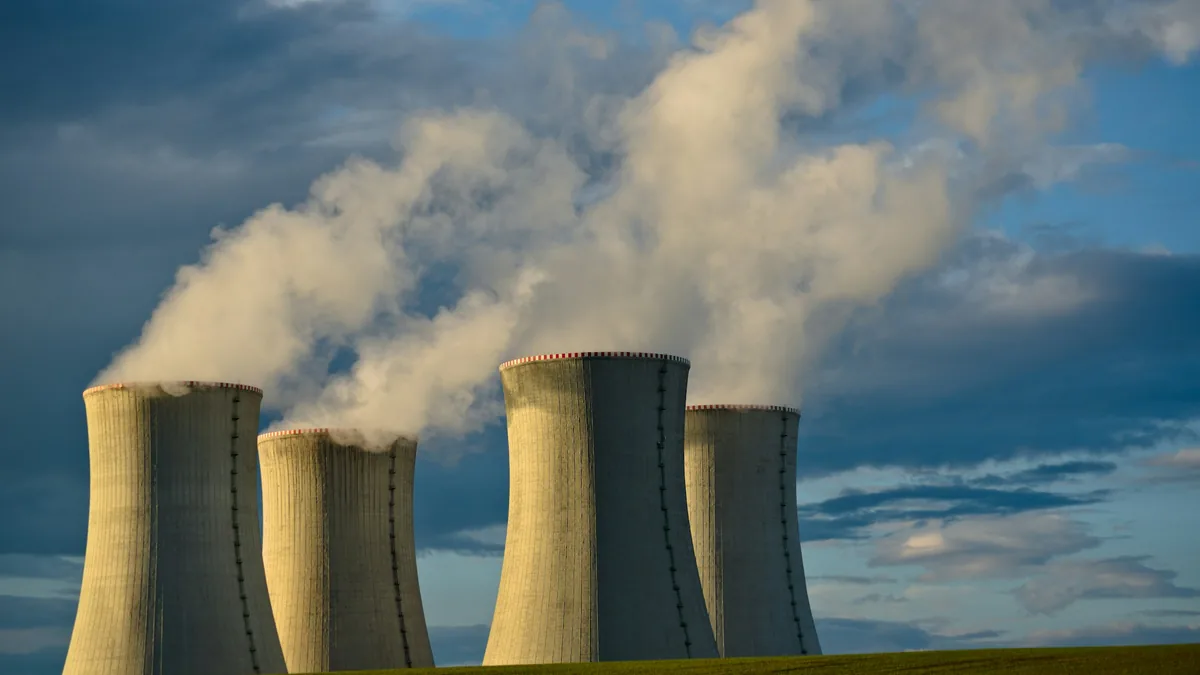
Market Size and CAGR by Period
Market IntelligencePublished April 27, 2026•Updated May 9, 2026•6 min
Global Small Modular Reactor (SMR) Market Outlook to 2035
The global SMR market grows from US$2.5 billion in 2024 to US$40 billion by 2035 at 30% CAGR, anchored by Microsoft-TMI restart, Amazon-X-energy, Google-Kairos PPAs, TerraPower Wyoming, and AI-data-centre power demand.
Key Takeaways
- 01
The global SMR market grows from US$2.5 billion in 2024 to US$40 billion by 2035 at 30% CAGR, anchored by hyperscaler PPAs and AI-data-centre power demand.
- 02
Microsoft-Constellation 20-year PPA (September 2024) for 835 MW from Crane Clean Energy Center (formerly TMI Unit 1); restart 2027-28 with US$1.6 billion and US$1 billion Trump loan.
- 03
Amazon-X-energy US$500 million anchor, Energy Northwest 320-960 MW, and Dominion North Anna 300 MW; subsequent X-energy, KHNP, and Doosan US$50 billion partnership.
- 04
Google-Kairos Master Plant Development Agreement (October 2024) commits 500 MW by 2035; Hermes 2 Oak Ridge 50 MW to TVA grid by 2030.
- 05
NuScale-UAMPS termination (November 2023) is the structural cautionary case: cost target US$55/MWh climbed to US$89/MWh; DOE commitment cut from US$1.4 billion to US$50 million.
Executive Summary
Small modular reactors are crossing from policy-and-development to bankable-customer category as hyperscaler PPAs convert speculative pipeline into commercial commitments. The integrated SMR market, spanning project capex, supplier capacity, advanced-reactor development, financing, fuel, and emerging operational revenue, grows from US$2.5 billion in 2024 to US$40 billion by 2035 at 30% CAGR.
Three forces drive the trajectory. Hyperscaler PPAs anchor demand: Microsoft signed a 20-year PPA with Constellation in September 2024 for 835 MW from the renamed Crane Clean Energy Center (formerly Three Mile Island Unit 1), with US$1.6 billion and US$1 billion Trump administration loan announced November 2025 for 2027-28 service return; Amazon committed US$500 million anchor, 320-960 MW at Energy Northwest, and 300 MW at Dominion North Anna, expanded into a US$50 billion X-energy, KHNP, and Doosan partnership; Google-Kairos Master Plant Development Agreement (October 14, 2024) commits 500 MW by 2035 with Hermes 2 (50 MW to TVA grid) by 2030. Regulatory progress accelerated: NRC issued the first Environmental Impact Statement for a commercial advanced reactor (TerraPower Natrium, October 2025) and final safety evaluation December 2025. And the structural cautionary case (NuScale-UAMPS termination, November 2023) reset analyst expectations on cost discipline.
Market Overview
The SMR category covers advanced reactor designs in the 50-345 MW range using light-water (NuScale, Holtec SMR-300, GE Hitachi BWRX-300, Westinghouse AP300, Rolls-Royce SMR), high-temperature gas-cooled (X-energy Xe-100), molten-salt-cooled (Kairos KP-FHR), or sodium-cooled fast (TerraPower Natrium) technologies. The integrated value chain spans project capex, reactor pressure vessel manufacturing (BWXT, Doosan), HALEU fuel supply (Centrus, BWXT, Orano), demonstration programme funding, and financing.
The category sits at the intersection of three macroeconomic forces. AI-data-centre power consumption is forecast to grow approximately four times through 2030 per IEA estimates; carbon-free 24/7 power requirement and grid-capacity constraints drive hyperscaler nuclear procurement. Cost-and-bankability discipline imposed by the NuScale-UAMPS cancellation requires scaled-economics from day one, subscription bankability, and regulatory progress satisfied simultaneously. And US export-control posture and cross-border sovereign capital flows (KHNP and MGX participation) reshape commercial geography.
Geopolitically, North America hosts 48% of project pipeline value through DOE Advanced Reactor Demonstration Program and IRA Section 48E ITC. Europe hosts 18% via UK Great British Nuclear competition, Czech Republic, and Romania first-of-a-kind procurement. Russia operates RITM-200 on icebreakers and Akademik Lomonosov floating reactor (Pevek operational since 2020) but Western sanctions limit OECD-market reach.
Market Size and Growth Outlook
Global SMR Market Size
US$ billion, 2020-2035
| Label | Value (US$B) |
|---|---|
| 2020 | 0.4 US$B |
| 2022 | 0.9 US$B |
| 2024 | 2.5 US$B |
| 2026 | 5 US$B |
| 2028 | 9.5 US$B |
| 2030 | 16 US$B |
| 2032 | 25 US$B |
| 2035 | 40 US$B |
| Year | Market Size (US$B) | CAGR versus prior period |
|---|---|---|
| 2020 | 0.4 | — |
| 2024 | 2.5 | 58% |
| 2026 | 5.0 | 41% |
| 2028 | 9.5 | 38% |
| 2030 | 16.0 | 30% |
| 2032 | 25.0 | 25% |
| 2035 | 40.0 | 17% |
Source: Triangulated BIS Research, Spherical Insights, hyperscaler PPA disclosures, DOE programme commitments.
The 2024-30 phase compounds at approximately 35% as hyperscaler PPAs convert and supplier capacity scales (BWXT, Doosan, Centrus). Growth moderates from 2031 onward as first commercial SMRs come online (TerraPower Natrium 2031, Kairos Hermes 2 by 2030) and operational revenue begins to materialise. By 2035, deployed SMR capacity reaches 8-12 GW versus 0 GW operating today (excluding Russian icebreakers and Chinese Linglong One).
Market Segmentation
By Reactor Technology
By Reactor Technology (2024 share: pipeline and commitments)
- Light-water SMR (NuScale, Holtec, BWRX-300, AP300)32.0%
- HTGR (X-energy Xe-100)18.0%
- Molten salt (Kairos KP-FHR)14.0%
- Sodium fast (TerraPower Natrium)14.0%
- Other advanced (Holtec, Rolls-Royce, KHNP)12.0%
- Conventional restart (TMI, Palisades)10.0%
| Label | Value (%) |
|---|---|
| Light-water SMR (NuScale, Holtec, BWRX-300, AP300) | 32% |
| HTGR (X-energy Xe-100) | 18% |
| Molten salt (Kairos KP-FHR) | 14% |
| Sodium fast (TerraPower Natrium) | 14% |
| Other advanced (Holtec, Rolls-Royce, KHNP) | 12% |
| Conventional restart (TMI, Palisades) | 10% |
Light-water dominates through 2030 because NRC has decades of LWR licensing experience. HTGR (X-energy Xe-100) is the highest-profile non-LWR design with hyperscaler backing. Kairos molten-salt-cooled is the most prominent corporate-PPA-anchored design (Google-Kairos 500 MW). TerraPower Natrium benefits from the largest single DOE cost-share (up to US$2 billion) and Bill Gates capital. Conventional restart (TMI, Palisades) captures AI-data-centre demand on a faster timeline (2027-28) than first-of-a-kind SMR (2030-32).
By Buyer Cohort
By Buyer Cohort (2024 share)
- Hyperscaler / AI data centre38.0%
- Investor-owned utilities22.0%
- Public power and cooperatives14.0%
- Government and DOE demonstration12.0%
- Industrial off-takers (Dow, steel)9.0%
- International / sovereign5.0%
| Label | Value (%) |
|---|---|
| Hyperscaler / AI data centre | 38% |
| Investor-owned utilities | 22% |
| Public power and cooperatives | 14% |
| Government and DOE demonstration | 12% |
| Industrial off-takers (Dow, steel) | 9% |
| International / sovereign | 5% |
Hyperscaler at 38% is the largest and most strategically important buyer cohort. Without hyperscaler offtake, the SMR category would not have the bankable customer substrate to support FID conversion. Five hyperscalers (Microsoft, Amazon, Google, Meta, Oracle) collectively committed more than US$50 billion through 2035. Industrial off-takers at 9% expand to 14% by 2032 led by Dow Seadrift X-energy partnership and emerging green-steel hydrogen-DRI demand.
By Region
By Region (2024 share: capacity commitments)
| Label | Value (%) |
|---|---|
| North America (US and Canada) | 48% |
| Europe (UK, France, EU) | 18% |
| Asia (Korea, Japan, China-domestic) | 16% |
| Russia (RITM-200 export) | 8% |
| Middle East and Latin America | 10% |
North America dominates due to hyperscaler concentration, DOE ARDP, and NRC licensing leadership. Europe scales on UK Great British Nuclear competition (Rolls-Royce SMR domestic and international competition between Westinghouse, GE Hitachi, Holtec, NuScale, KHNP), Czech Republic ČEZ AP300, and Romania alternative competition. Korea KHNP exports SMART (Saudi commercialised) and i-SMR domestic.
Trends and Developments
Hyperscaler PPAs anchor SMR commercial bankability
Microsoft signed a 20-year PPA with Constellation September 2024 for 835 MW from the renamed Crane Clean Energy Center (TMI Unit 1 restart, US$1.6 billion and US$1 billion Trump administration loan November 2025; service return 2027-28). Amazon committed US$500 million X-energy anchor, Energy Northwest 320-960 MW, and Dominion North Anna 300 MW; the subsequent US$50 billion X-energy, KHNP, and Doosan partnership scales the commitment. Google-Kairos Master Plant Development Agreement (October 14, 2024) commits 500 MW by 2035 with Hermes 2 (50 MW to TVA grid) by 2030. Meta issued a nuclear RFP in 2024; Oracle announced nuclear interest. Cumulative hyperscaler nuclear (existing and SMR) commitments exceed US$50 billion through 2035, financed against the same sovereign-AI compute build-out that has made power availability the binding execution constraint at frontier scale.
TerraPower Natrium NRC milestones validate licensing pathway
TerraPower received the first NRC EIS for a commercial advanced reactor in October 2025, and final safety evaluation December 2025 for the Wyoming Natrium 345 MW project. Non-nuclear construction began June 2024. Total project value approximately US$10 billion with 50-50 DOE cost-share up to US$2 billion under the Advanced Reactor Demonstration Program. Expected online 2031. The NRC milestones demonstrate that advanced-reactor designs can complete licensing on a feasible timeline.
NuScale-UAMPS cancellation as cautionary case
The Carbon Free Power Project termination (November 8, 2023) reset analyst expectations. Project originally envisioned at 720 MWe (12 NuScale modules), scaled to 462 MWe (6 modules); cost target of US$55/MWh climbed to US$89/MWh delivered; subscription support failed to materialise. DOE commitment reduced from initial US$1.4 billion to approximately US$50 million via asset transfer. NuScale faced subsequent SEC investigations. The cancellation demonstrated that subscription bankability, cost discipline, and regulatory progress must be achieved simultaneously.
Other relevant developments include the ADVANCE Act (signed July 2024) modernising NRC licensing process and reducing first-of-a-kind fees, HALEU fuel supply chain emerging at Centrus Piketon Ohio, BWXT, and Orano, X-energy Dow Seadrift industrial partnership scaling, Holtec SMR-300 Palisades restart partnership, UK Great British Nuclear vendor selection in 2026, and the parallel long-duration energy storage procurement that hyperscalers are running alongside SMR PPAs to firm 24/7 carbon-free supply.
Competitive Landscape
SMR Competitive Landscape (2024 commitment and share)
| Label | Value (%) |
|---|---|
| X-energy, Amazon, KHNP, and Doosan | 16% |
| Constellation and Microsoft (TMI restart) | 11% |
| TerraPower (Wyoming Natrium 345 MW) | 10% |
| Kairos Power, Google, and TVA | 8% |
| Russia Rosatom (RITM-200, Akademik) | 8% |
| Korea KHNP (SMART and i-SMR) | 6% |
| NuScale Power | 6% |
| Other (Holtec, GE Hitachi, Westinghouse, Rolls-Royce) | 35% |
The X-energy, Amazon, KHNP, and Doosan consortium leads on hyperscaler-anchored capital scale. Constellation and Microsoft anchors the AI-nuclear template via TMI restart. TerraPower has the largest single SMR-class project (Wyoming Natrium) with the largest DOE cost-share. Kairos Power demonstrates the multi-deployment Master Plant Development Agreement template via Google-Kairos. NuScale is in post-UAMPS-cancellation recovery mode. Top-7 collectively control approximately 64% of category value.
Key Policies and Regulatory Environment
IRA Section 45U and Section 48E
IRA Section 45U Production Tax Credit (effective 2024-32) provides production-side support for existing nuclear including TMI restart eligibility. IRA Section 48E Clean Electricity ITC (effective 2025-32) provides 30% investment-side support for new nuclear including SMRs, with prevailing-wage and apprenticeship requirements. OBBBA (July 2025) preserved core nuclear credits even as solar and wind credits faced phaseouts. This is the binding US economic framework.
ADVANCE Act (July 2024) NRC licensing modernisation
The ADVANCE Act modernised NRC licensing process: reduced first-of-a-kind licensing fees, nuclear workforce development funding, advanced reactor deployment timeline acceleration. Implementation through 2025-28 reduces NRC licensing-cycle time from approximately 5-7 years to 3-5 years for subsequent SMR designs and enables the multi-deployment Master Plant Development Agreement model.
Other relevant frameworks include the DOE Advanced Reactor Demonstration Program (TerraPower and X-energy combined US$3.2 billion federal cost-share commitment and Loan Programs Office for early commercial projects, more than US$10 billion in DOE commitment through 2030), the UK Great British Nuclear competition (vendor selection 2026), Czech Republic ČEZ AP300 selection (2024), Poland and Romania first-of-a-kind procurement, and Korea KHNP commercialisation programmes for international export.
Future Outlook
The SMR market in 2035 reaches approximately US$40 billion in annual revenue. Operational revenue accounts for 38% of value (US$15 billion), project capex 30%, supplier manufacturing 22%, fuel supply 6%, and advanced-reactor development and financing 4%. Deployed SMR capacity reaches 8-12 GW by 2035 versus 0 GW today (excluding Russian icebreakers and Chinese Linglong One).
The competitive landscape consolidates substantially. Top-3 hyperscaler-anchored consortia (X-energy, Amazon, KHNP, and Doosan, Constellation and Microsoft, TerraPower with utility partners) control approximately 45% of category value by 2035 (up from 37% in 2024). Mid-tier light-water SMR cohort (Holtec SMR-300, GE Hitachi BWRX-300, Westinghouse AP300, Rolls-Royce SMR, KHNP) holds approximately 30%.
The biggest risk is a second NuScale-class cancellation or major hyperscaler PPA termination. If any of the top-3 hyperscaler-anchored projects (Microsoft-Constellation TMI, Amazon-X-energy Energy Northwest, Google-Kairos Hermes 2) faces material delays or cancellation, the back-half of the forecast (2032-35) compresses by 30-40%. Leading indicators are 2027 TMI restart progress, 2030 Hermes 2 commissioning, and 2031 TerraPower Natrium operational ramp.
Decision implications
- Hyperscalers and AI data-centre operators
Lock multi-year nuclear PPAs with diversified portfolio across conventional restart (faster, 2027-28), SMR first-of-a-kind (slower, 2030-32), and renewable and storage. Microsoft-Constellation TMI, Amazon-X-energy, and Google-Kairos are reference structures.
- Utilities
First-of-a-kind cost-and-schedule risk requires hyperscaler offtake or DOE cost-share or both for project bankability. NuScale-UAMPS is the cautionary template; do not pursue projects without subscription bankability, cost discipline, and regulatory progress simultaneously.
- Advanced nuclear operators
First-of-a-kind delivery on schedule is the binding strategic priority. Hermes 2 (2030), Natrium (2031), and X-energy Energy Northwest (2030-32) outcomes determine category trajectory through 2035.
Frequently Asked Questions
Approximately US$2.5 billion globally in 2024 on a broad scope basis (project capex commitments, supplier manufacturing, advanced-reactor development, financing, fuel, and emerging operational revenue). The 2026 forecast is US$5 billion.
A CAGR of 30%, reaching US$40 billion globally by 2035 in our base case. Cumulative spend across 2025-2035 exceeds US$220 billion across the six flow components.
Microsoft signed a 20-year PPA with Constellation in September 2024 for 835 MW from the renamed Crane Clean Energy Center (TMI Unit 1 restart). Conventional reactor restart returns to service 2027-28, faster than SMR first-of-a-kind (2030-32). The faster timeline matches AI-data-centre power demand. Constellation invests US$1.6 billion and US$1 billion Trump administration loan announced November 2025.
The Carbon Free Power Project was terminated November 8, 2023. Project originally envisioned at 720 MWe (12 NuScale modules), scaled to 462 MWe (6 modules); cost target of US$55/MWh climbed to US$89/MWh delivered; subscription support failed to materialise. DOE commitment reduced from initial US$1.4 billion to approximately US$50 million via asset transfer.
A second NuScale-class cancellation or major hyperscaler PPA termination. If any top-3 hyperscaler-anchored project (Microsoft-Constellation TMI, Amazon-X-energy Energy Northwest, Google-Kairos Hermes 2) faces material delays or cancellation, back-half forecast (2032-35) compresses by 30-40%. Secondary risk is HALEU fuel supply gap if Centrus, BWXT, and Orano production capacity ramps slower than 2027-28 expectations.
About Stratpace Advisory
Stratpace Advisory is a new-age market research and strategic advisory firm. Our work supports founders, executives, and investment teams making high-stakes decisions across energy, healthcare, technology, and sustainability. We build from primary research, competitive intelligence, and structured analysis – evidence over opinion.
Further Reading
Market Intelligence
Global Grid-Scale Battery Storage (BESS) Market Outlook to 2032
The global grid-scale BESS market grows from US$13 billion in 2024 to US$135 billion by 2032 at 33% CAGR, anchored by ERCOT 14 GW, CAISO 17 GW, Tesla and Sungrow leadership, and IRA 45X battery cell credit.
May 2026•6 min
Market Intelligence
Global Long-Duration Energy Storage Market Outlook to 2032
The global LDES market grows from US$5 billion in 2024 to US$45 billion by 2032 at 30% CAGR, anchored by Form Energy commercial shipments, Energy Dome Sardinia, hyperscaler offtake, and DOE Storage Shot 90% cost target.
Feb 2026•6 min
Market Intelligence
Global Cell and Gene Therapy CDMO Market Outlook to 2032
The global cell and gene therapy CDMO market grows from US$7 billion in 2024 to US$50 billion by 2032 at 28% CAGR, driven by more than 30 approved CGTs, BIOSECURE-induced decoupling, and Novo Holdings-Catalent reshaping capacity.
Mar 2026•6 min
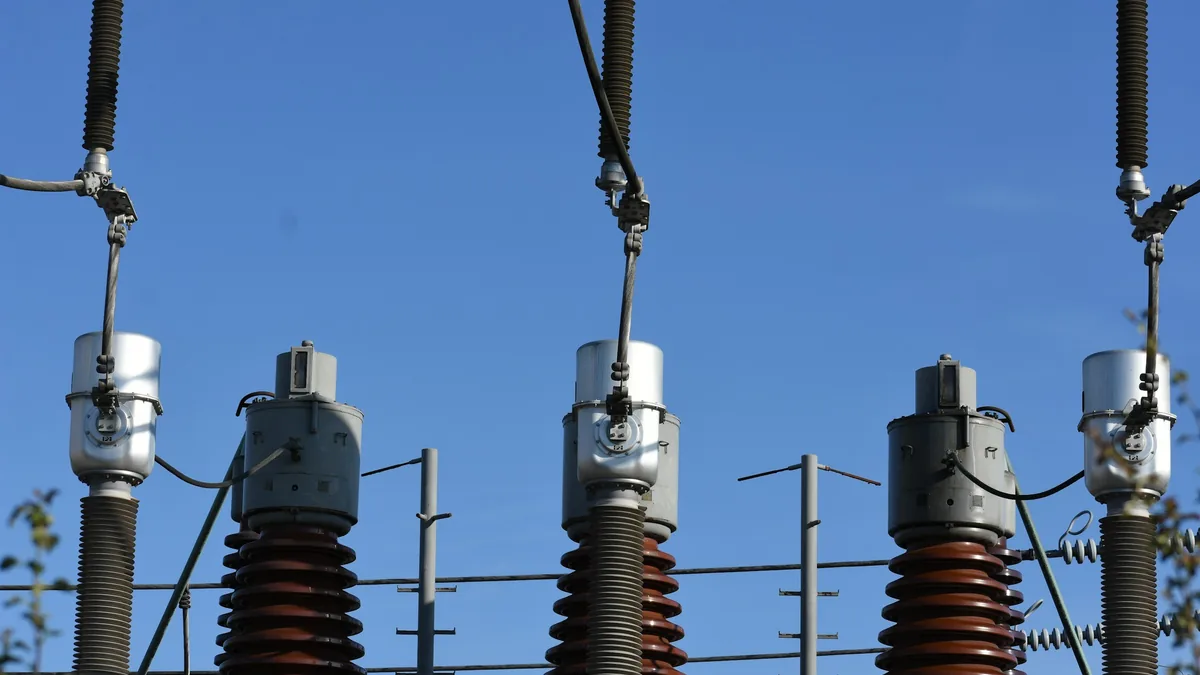
India Smart-Grid Metering Market Entry for a European OEM
A market-entry analysis that took a European metering OEM from a vague "we should be in India" thesis to a costed, partner-anchored entry plan for the AMI build-out underwritten by RDSS.
Mar 2026
Market Intelligence
Global Advanced Packaging and HBM Market Outlook to 2032
AI-relevant advanced packaging and HBM grows from US$22 billion in 2024 to US$265 billion by 2032 at 36% CAGR as TSMC CoWoS doubles, NVIDIA books 60% of capacity, and HBM4 sells out 100% of 2026 supply.
Mar 2026•6 min

Market Intelligence
Global Data Centre Liquid Cooling Market Outlook to 2032
The global data-centre liquid cooling market grows from US$3 billion in 2025 to US$12 billion by 2032 at 22% CAGR, anchored by NVIDIA GB200 NVL72 thermal density, hyperscaler GB300 deployments, and M&A consolidation.
Mar 2026•6 min