All Intelligence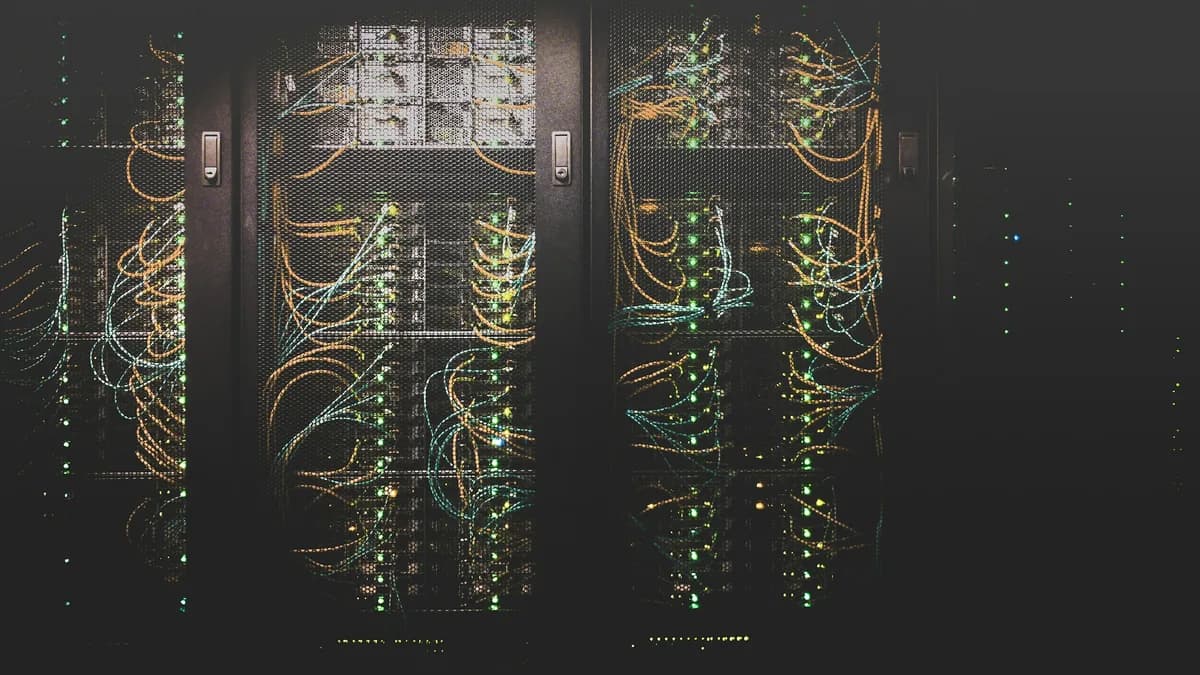
Market Size and CAGR by Period
Market IntelligencePublished March 2, 2026•Updated May 4, 2026•6 min
Global Data Centre Liquid Cooling Market Outlook to 2032
The global data-centre liquid cooling market grows from US$3 billion in 2025 to US$12 billion by 2032 at 22% CAGR, anchored by NVIDIA GB200 NVL72 thermal density, hyperscaler GB300 deployments, and M&A consolidation.
Key Takeaways
- 01
The global data-centre liquid cooling market grows from US$3 billion in 2025 (Dell'Oro) to US$12 billion by 2032 at 22% CAGR, driven by GB200 NVL72 thermal density.
- 02
NVIDIA GB200 NVL72 specifies 120 kW per rack and 1.36 metric tons, fully liquid-cooled; 25,000-35,000 cabinets shipped 2025 (revised down from 50,000-80,000).
- 03
Top 5 vendors (Schneider, Vertiv, Rittal, Stulz, Boyd) hold 35% market share in 2025; M&A consolidation accelerating with Daikin-Chilldyne November 2025.
- 04
CoreWeave's GB200 deployment uses 85% liquid and 15% air, demonstrating the hybrid architecture that scales as rack density rises.
- 05
HPE first GB200 NVL72 shipment February 2025; AWS EC2 P6e-GB300 UltraServers GA December 2, 2025; Microsoft Azure GB300 cluster for OpenAI October 2025.
Executive Summary
Data-centre liquid cooling has crossed from niche to standard-of-care for AI compute. The global market doubled in 2025 to approximately US$3 billion (Dell'Oro October 2025) and grows to US$12 billion by 2032 at 22% CAGR, anchored by NVIDIA GB200 NVL72 deployment thermal density and hyperscaler GB300 NVL72 cluster scale-up.
Three forces drive the trajectory. NVIDIA's GB200 NVL72 specifies 120 kW per rack at 1.36 metric tons fully liquid-cooled; 2025 shipments reached 25,000-35,000 cabinets (revised down from initial 50,000-80,000 forecast). HPE delivered its first GB200 NVL72 in February 2025; AWS EC2 P6e-GB300 UltraServers reached general availability December 2, 2025; Microsoft Azure commissioned its first large-scale GB300 NVL72 cluster for OpenAI workloads in October 2025. And vendor consolidation accelerated: Vertiv-CoolTera (December 2023), Schneider-Motivair (October 2024), Daikin Applied-DDC Solutions (August 2025), Daikin Applied-Chilldyne (November 4, 2025).
Market Overview
Data-centre liquid cooling captures rear-door heat exchangers, in-row chilled-water systems, direct-to-chip cooling, and immersion cooling. The category is distinct from traditional CRAC and CRAH air cooling and is increasingly the standard architecture for AI compute racks above approximately 30 kW per rack.
The category sits at the intersection of three forces. NVIDIA's GB200, GB300, and Rubin generation roadmap drives thermal density growth that air cooling cannot economically address; rack power density rising from approximately 10-15 kW (legacy enterprise) to 50-120 kW (current AI) toward more than 200 kW (next-generation). Hyperscaler AI capex is the demand-side anchor: Microsoft, Amazon, Google, Meta, and Oracle deploy at scale through 2027. And manufacturer consolidation is reshaping vendor architecture, with the top-5 vendors capturing 35% share by 2025 and the M&A pace accelerating into 2026.
Geopolitically, liquid cooling demand concentrates where AI compute capacity concentrates: US (Microsoft Azure, AWS, Google Cloud, Meta data-centre regions), East Asia (Korean and Japanese hyperscaler facilities), and emerging Middle East deployments anchored by Stargate UAE and HUMAIN.
Market Size and Growth Outlook
Global Data Centre Liquid Cooling Market Size
US$ billion, 2022-2032
| Label | Value (US$B) |
|---|---|
| 2022 | 0.6 US$B |
| 2024 | 1.5 US$B |
| 2025 | 3 US$B |
| 2026 | 4.5 US$B |
| 2028 | 7 US$B |
| 2030 | 9.5 US$B |
| 2032 | 12 US$B |
| Year | Market Size (US$B) | CAGR versus prior period |
|---|---|---|
| 2022 | 0.6 | — |
| 2024 | 1.5 | 58% |
| 2025 | 3.0 | 100% |
| 2026 | 4.5 | 50% |
| 2028 | 7.0 | 25% |
| 2030 | 9.5 | 16% |
| 2032 | 12.0 | 12% |
Source: Triangulated Dell'Oro Group October 2025, named-vendor disclosures, hyperscaler GB200 and GB300 deployment tracking.
The 2025 doubling reflects the GB200 NVL72 deployment ramp at hyperscaler scale. From 2026-28 growth moderates to 25-50% as GB300 deployments compound and Rubin-generation thermal-density requirements drive next-wave capex. Beyond 2030, growth moderates to approximately 12-16% as the AI rack-density curve plateaus and the easy retrofit demand saturates.
Market Segmentation
By Cooling Technology
By Cooling Technology (2025 share)
- Direct-to-chip (cold plate, single-phase)48.0%
- Rear-door heat exchanger (RDHx)22.0%
- In-row chilled-water with CDU14.0%
- Two-phase direct-to-chip9.0%
- Immersion cooling (single and dual phase)7.0%
| Label | Value (%) |
|---|---|
| Direct-to-chip (cold plate, single-phase) | 48% |
| Rear-door heat exchanger (RDHx) | 22% |
| In-row chilled-water with CDU | 14% |
| Two-phase direct-to-chip | 9% |
| Immersion cooling (single and dual phase) | 7% |
Direct-to-chip cold plate at 48% is the dominant architecture for GB200 and GB300 deployments. Rear-door heat exchangers at 22% serve hybrid deployments where existing air cooling extends into liquid-augmented designs. Two-phase direct-to-chip and immersion cooling at 16% combined are the fastest-growing technologies as densities of more than 200 kW per rack arrive in 2027-28 with Rubin generation.
By Buyer Cohort
By Buyer Cohort (2025 share)
- Hyperscalers (AWS, Azure, GCP, Meta, Oracle)56.0%
- AI-native cloud (CoreWeave, Lambda, Crusoe)18.0%
- Colocation (Equinix, Digital Realty, Iron Mountain)14.0%
- Enterprise on-premise AI8.0%
- Sovereign and government4.0%
| Label | Value (%) |
|---|---|
| Hyperscalers (AWS, Azure, GCP, Meta, Oracle) | 56% |
| AI-native cloud (CoreWeave, Lambda, Crusoe) | 18% |
| Colocation (Equinix, Digital Realty, Iron Mountain) | 14% |
| Enterprise on-premise AI | 8% |
| Sovereign and government | 4% |
Hyperscalers at 56% dominate the buyer cohort. AI-native clouds at 18% concentrate on GB200 NVL72 and GB300 deployment with high-density direct-to-chip cooling architecture (CoreWeave's deployment uses 85% liquid, 15% air). Colocation at 14% scales as Equinix, Digital Realty, and Iron Mountain retrofit existing facilities and build new AI-ready capacity.
By Region
By Region (2025 share)
| Label | Value (%) |
|---|---|
| United States | 56% |
| China and East Asia | 22% |
| Europe (UK, Germany, Nordics, Ireland) | 12% |
| Middle East (Stargate UAE and HUMAIN) | 6% |
| India and Other emerging | 4% |
The US at 56% reflects hyperscaler concentration and AI-native cloud deployment scale. China and East Asia includes Korean and Japanese hyperscaler-equivalent facilities. Middle East at 6% expands rapidly through 2030 as Stargate UAE and HUMAIN scale. The fastest-growing regional segment is the Middle East at approximately 50% CAGR through 2028.
Trends and Developments
NVIDIA GB200 NVL72 thermal density drives architecture shift
NVIDIA's GB200 NVL72 specifies 120 kW per rack at 1.36 metric tons fully liquid-cooled. 2025 cabinet shipments reached 25,000-35,000 (revised down from initial 50,000-80,000 forecast on TSMC CoWoS-L and HBM3E supply constraints). HPE delivered its first GB200 NVL72 in February 2025; CoreWeave's GB200 order (US$2.3 billion for 2025 delivery) deployed with 85% liquid, 15% air. The GB300 generation (December 2025 production) extends the thermal density trajectory; the Rubin generation in 2026-27 pushes density toward more than 200 kW per rack.
Hyperscaler GB300 deployment cluster
Microsoft Azure commissioned its first large-scale GB300 NVL72 cluster for OpenAI workloads in October 2025. AWS EC2 P6e-GB300 UltraServers reached general availability December 2, 2025. Google Cloud, Meta, and Oracle Cloud scale parallel deployments. Each hyperscaler deployment locks multi-year liquid cooling demand at scaled vendor capacity, anchoring the category's structural growth.
Vendor M&A consolidation accelerates
Vertiv acquired CoolTera (closed December 2023). Schneider acquired Motivair (October 2024). Daikin Applied acquired DDC Solutions (August 2025) and Chilldyne (November 4, 2025). Top-5 vendor share reached 35% in 2025 per Dell'Oro. Concentration is structurally increasing as hyperscaler procurement favours scaled multi-modal vendors with direct-to-chip, rear-door, CDU, and immersion capability.
Other relevant developments include immersion cooling commercial scale at hyperscaler pilots, direct-to-chip second-generation cold plate designs reducing flow rate per kW, two-phase architecture entering volume deployment in 2026, and the broader AI-data-centre power-and-cooling supply chain (covered in our Sovereign AI Infrastructure outlook) compounding capacity-allocation pressure.
Competitive Landscape
Top Liquid Cooling Vendors (2025 share, Dell'Oro)
| Label | Value (%) |
|---|---|
| Schneider Electric (post-Motivair) | 9% |
| Vertiv (post-CoolTera) | 8% |
| Rittal | 6% |
| Stulz | 6% |
| Boyd | 6% |
| Daikin Applied (post-DDC and Chilldyne) | 5% |
| CoolIT Systems | 4% |
| Other (Asetek, Wiwynn, Submer, GRC, others) | 56% |
The category is moderately concentrated: top-5 control 35% of 2025 share. Schneider Electric leads post the Motivair acquisition, anchored by EcoStruxure data-centre infrastructure scale. Vertiv (post-CoolTera) is the closest competitor, with stronger AI-native cloud customer base. Rittal, Stulz, and Boyd round out the top-5 with specialised cooling-equipment heritage. Daikin Applied's two 2025 acquisitions (DDC Solutions August, Chilldyne November) signal accelerating consolidation. CoolIT Systems anchors mid-market direct-to-chip deployment. Asetek, Wiwynn, Submer, GRC, and emerging immersion specialists capture niche segments.
Key Policies and Regulatory Environment
EU Energy Efficiency Directive (recast)
The recast EU Energy Efficiency Directive (in force October 2023, transposition through 2025-26) requires annual data-centre energy efficiency reporting for facilities above 100 kW in the EU. Liquid cooling supports meeting Power Usage Effectiveness (PUE) targets approaching 1.1 versus air-cooled approaching 1.4-1.5. The framework creates structural demand-side underwriting for liquid cooling in EU jurisdictions.
US DOE Better Climate Challenge and state-level frameworks
US DOE Better Climate Challenge and state-level data-centre energy frameworks (notably Virginia, Texas, Oregon, Washington) drive PUE and water-usage-efficiency targets. California's emerging data-centre legislation tightens PUE benchmarks for new facilities. The frameworks support liquid cooling adoption in markets where new data-centre capacity is planning-permission-constrained.
Other relevant frameworks include China's PUE caps for new data centres in tier-1 cities (target 1.3, tier-1 facilities capped at 1.25), Singapore's IMDA Green Data Centre Roadmap, India's Data Centre Policy 2025, and emerging Middle East frameworks tied to Stargate UAE and HUMAIN deployments.
Future Outlook
The data-centre liquid cooling market in 2032 reaches approximately US$12 billion in annual value. Direct-to-chip captures approximately 52% of category by 2032 (versus 48% in 2025). Two-phase direct-to-chip and immersion cooling expand from 16% to 26% as Rubin-generation thermal density forces architecture shift. Rear-door heat exchangers compress from 22% to 14% as hybrid retrofit demand saturates.
The competitive landscape consolidates further. We expect 2-3 additional acquisition events among smaller liquid cooling vendors by 2027 as hyperscaler procurement favours scaled multi-modal capability. Top-5 share rises from 35% (2025) to approximately 48% by 2032. Daikin Applied, Schneider, and Vertiv emerge as the integrated multi-modal leaders.
The biggest risk is an AI capex pause through 2027-28 that compresses GB300 and Rubin deployment demand. The leading indicator is hyperscaler quarterly capex disclosures and NVIDIA cabinet shipment trajectory through 2026-27.
Decision implications
- Hyperscaler procurement teams
Lock multi-year liquid cooling capacity 18-24 months ahead. GB200, GB300, and Rubin generation thermal density compounds; vendor selection now determines 2027-28 deployment capability.
- Cooling equipment vendors
Consolidation favours multi-modal capability (direct-to-chip, rear-door, and immersion). Pure-play single-technology specialists face acquisition pressure or commoditisation.
- Colocation operators
Retrofit existing facilities for hybrid air-and-liquid and build new AI-ready capacity at more than 50 kW per rack. CoreWeave's 85% liquid, 15% air template scales for colocation tenants.
Frequently Asked Questions
Approximately US$3 billion globally in 2025 per Dell'Oro October 2025 (doubled from 2024). The 2026 forecast is US$4.5 billion as GB300, next-generation deployments scale at hyperscaler, and AI-native cloud customers.
A CAGR of 22%, reaching US$12 billion globally by 2032 in our base case. Cumulative liquid cooling capex through 2030 exceeds US$40 billion across the four cooling architectures.
NVIDIA's GB200 NVL72 specifies 120 kW per rack at 1.36 metric tons fully liquid-cooled. Air cooling becomes uneconomical above approximately 30 kW per rack; AI compute deployments at 50-120 kW per rack require liquid cooling for thermal management. The Rubin generation in 2026-27 pushes density toward more than 200 kW per rack, deepening the requirement.
Schneider Electric (post-Motivair acquisition October 2024) leads at 9% share. Vertiv (post-CoolTera December 2023) at 8%. Rittal, Stulz, and Boyd at 6% each. Daikin Applied (post-DDC and Chilldyne acquisitions in 2025) at 5%. Top-5 collectively 35% of 2025 share per Dell'Oro.
An AI capex pause through 2027-28 that compresses GB300 and Rubin deployment demand. The leading indicator is hyperscaler quarterly capex disclosures and NVIDIA cabinet shipment trajectory through 2026-27. Secondary risk is the emergence of meaningfully more efficient air-cooling architectures that delay liquid cooling adoption at the margin.
About Stratpace Advisory
Stratpace Advisory is a new-age market research and strategic advisory firm. Our work supports founders, executives, and investment teams making high-stakes decisions across energy, healthcare, technology, and sustainability. We build from primary research, competitive intelligence, and structured analysis – evidence over opinion.
Further Reading
Market Intelligence
Global Advanced Packaging and HBM Market Outlook to 2032
AI-relevant advanced packaging and HBM grows from US$22 billion in 2024 to US$265 billion by 2032 at 36% CAGR as TSMC CoWoS doubles, NVIDIA books 60% of capacity, and HBM4 sells out 100% of 2026 supply.
Mar 2026•6 min
Market Intelligence
Global Sovereign AI Infrastructure Programmes Outlook to 2030
Sovereign AI infrastructure programmes are forecast to deploy over US$1.5 trillion of cumulative capex through 2030, anchored by Stargate, HUMAIN, IndiaAI Mission, Mistral, and Isambard-AI and the cross-border MGX capital flow.
Feb 2026•6 min
Market Intelligence
Global Generative AI Foundation Models Outlook to 2030
Generative AI foundation models grow from US$30 billion in 2024 to US$420 billion by 2030 at 46% CAGR, driven by Anthropic's US$30 billion ARR (April 2026), OpenAI's US$25 billion, EU AI Act enforcement, and enterprise scale.
Mar 2026•6 min
Sovereign-AI Infrastructure Roadmap for a Gulf Sovereign Wealth Fund
A strategy-research engagement that took a Gulf SWF from a thesis on sovereign-AI participation to a phased, three-year roadmap covering compute access, power siting, partnership architecture, and capital deployment.
May 2026
Market Intelligence
Global Small Modular Reactor (SMR) Market Outlook to 2035
The global SMR market grows from US$2.5 billion in 2024 to US$40 billion by 2035 at 30% CAGR, anchored by Microsoft-TMI restart, Amazon-X-energy, Google-Kairos PPAs, TerraPower Wyoming, and AI-data-centre power demand.
Apr 2026•6 min

Competitive Intelligence Review for a Mid-Market SaaS Platform Re-evaluating Its Positioning
A structured competitive intelligence review that reframed how a B2B SaaS platform positioned itself against incumbents and well-funded challengers ahead of a planning cycle.
Apr 2026