All Intelligence
Cumulative Committed Capex and Operational Capacity
Market IntelligencePublished February 23, 2026•Updated May 4, 2026•6 min
Global Sovereign AI Infrastructure Programmes Outlook to 2030
Sovereign AI infrastructure programmes are forecast to deploy over US$1.5 trillion of cumulative capex through 2030, anchored by Stargate, HUMAIN, IndiaAI Mission, Mistral, and Isambard-AI and the cross-border MGX capital flow.
Key Takeaways
- 01
Sovereign AI infrastructure deploys over US$1.5 trillion of cumulative capex through 2030, anchored by Stargate (US$500 billion), HUMAIN, IndiaAI Mission, Mistral, and Isambard-AI.
- 02
The BIS AI Diffusion Rule was rescinded May 13, 2025 by the Trump administration, replacing country caps with bilateral partnership architecture.
- 03
Stargate UAE (G42, OpenAI, Oracle, NVIDIA, Cisco, and SoftBank; 1 GW within 5 GW campus) launched May 22, 2025; first 200 MW cluster 2026.
- 04
MGX cross-border capital flow links UAE sovereign capital to Stargate US, Mistral France 1.4 GW campus, and Anthropic Series G, a structurally important pattern.
- 05
Power availability is the binding execution constraint, not capital; grid, GB300 allocation, and cooling capacity gate deployment timelines.
Executive Summary
Sovereign AI infrastructure programmes have moved from announcement to construction. Cumulative committed capex across named programmes exceeds US$1.5 trillion through 2030, anchored by Stargate (US$500 billion / 10 GW by 2029), HUMAIN (Saudi Arabia, 600,000 NVIDIA GPUs over 3 years), IndiaAI Mission (₹10,372 crore outlay, more than 38,000 GPUs deployed), Mistral (US$830 million March 2026 financing, 1.4 GW 2030 campus), and Isambard-AI (UK, £225 million, live July 2025).
Three forces drive the trajectory. The May 13, 2025 rescission of the BIS AI Diffusion Rule by the Trump administration replaced country-cap architecture with bilateral partnership models, opening Stargate-class export deployments to UAE, Saudi Arabia, and other GCC partners. MGX cross-border capital flow now links UAE sovereign funds to Stargate US, Mistral France's 1.4 GW campus, and Anthropic's February 2026 US$30 billion Series G, a structurally important pattern. And the binding execution constraint has shifted from capital to physical: grid power availability, GB300 allocation, advanced packaging (CoWoS) capacity, and cooling infrastructure gate deployment timelines.
Market Overview
Sovereign AI infrastructure scope captures national-scale compute programmes that pair government policy with hyperscaler-vendor capex: Stargate (US, UAE, and Argentina), HUMAIN (Saudi Arabia and US extension), IndiaAI Mission, Mistral (France and EU sovereign positioning), Isambard-AI (UK), and the broader cohort of national AI strategies in Korea, Japan, Singapore, Canada, and emerging programmes. The category is distinct from commercial hyperscaler capex (covered in our Generative AI Foundation Models outlook) by its sovereign-policy-anchored governance and procurement model.
The category sits at the intersection of three forces. AI-data-centre power demand is forecast to grow approximately four times through 2030 per IEA estimates; sovereign programmes provide the policy and capital substrate to build dedicated capacity at scale. US export-control posture (the May 13, 2025 BIS Diffusion Rule rescission, the December 2025 H200 revenue-share arrangement, the January 13, 2026 BIS final rule on case-by-case licenses) shapes which sovereign partners can access frontier compute. And the binding execution constraint is physical: grid power availability is the binding bottleneck for Stargate sites, HUMAIN deployment, and Mistral's 1.4 GW campus.
Geopolitically, MGX cross-border capital flow is the canonical pattern. UAE sovereign capital participates in Stargate US (via G42 and partnership architecture), Mistral France 1.4 GW 2030 campus (NVIDIA and MGX), and Anthropic's February 2026 US$30 billion Series G. This compounds with PIF participation in HUMAIN US extension and broader cross-border flows that did not exist prior to 2024.
Market Size and Growth Outlook
Cumulative Sovereign AI Infrastructure Committed Capex
US$ billion, 2022-2030
| Label | Value (US$B) |
|---|---|
| 2022 | 35 US$B |
| 2023 | 120 US$B |
| 2024 | 380 US$B |
| 2025 | 720 US$B |
| 2026 | 1,050 US$B |
| 2028 | 1,350 US$B |
| 2030 | 1,550 US$B |
| Year | Cumulative Committed (US$B) | Operational Capacity (GW) |
|---|---|---|
| 2024 | 380 | 1.2 |
| 2026 | 1050 | 4.5 |
| 2028 | 1350 | 12.0 |
| 2030 | 1550 | 22.0 |
Source: Triangulated programme announcements, NVIDIA newsroom, sovereign-fund disclosures.
Cumulative committed capex compounds rapidly through 2026 as Stargate (US$500 billion / 10 GW) and HUMAIN (partnership of more than US$50 billion), IndiaAI Mission, Mistral, and Isambard-AI all advance. From 2027 onward, growth moderates as the capex cycle shifts from announcement to operational deployment; the binding constraint shifts from capital to physical. Operational sovereign-AI compute capacity grows from approximately 1.2 GW (2024) to 22 GW (2030) if announced programmes deliver on schedule.
Market Segmentation
By Programme
By Programme (2024 cumulative committed share)
- Stargate (US, UAE, and Argentina)38.0%
- HUMAIN (Saudi Arabia and US extension)18.0%
- IndiaAI Mission and state-level12.0%
- Mistral and EU sovereign cluster10.0%
- UK, Isambard-AI, and Sovereign AI Unit8.0%
- Korea, Japan, Singapore, Canada, other14.0%
| Label | Value (%) |
|---|---|
| Stargate (US, UAE, and Argentina) | 38% |
| HUMAIN (Saudi Arabia and US extension) | 18% |
| IndiaAI Mission and state-level | 12% |
| Mistral and EU sovereign cluster | 10% |
| UK, Isambard-AI, and Sovereign AI Unit | 8% |
| Korea, Japan, Singapore, Canada, other | 14% |
Stargate at 38% of committed capex anchors the category. HUMAIN at 18% includes the US-Saudi Investment Forum announcement of up to 600,000 NVIDIA GPUs over 3 years and the Aramco-aligned ecosystem. IndiaAI Mission's smaller absolute scale is offset by more than 38,000 GPUs deployed (versus 10,000 target) and the Yotta deployment (20,000 NVIDIA Blackwell Ultra by August 2026, 10,000 dedicated to IndiaAI). Mistral's commitment includes 13,800 NVIDIA GB300 at the 44 MW Bruyères-le-Châtel facility and the 1.4 GW 2030 campus.
By Technology Stack
By Technology Stack (2024 share)
- NVIDIA GB200 / GB300 / Blackwell Ultra62.0%
- AMD MI300X / MI325X14.0%
- Custom ASIC (Google TPU, Trainium, MAIA)12.0%
- Other (Cerebras, Groq, regional)6.0%
- Sovereign-specific designs6.0%
| Label | Value (%) |
|---|---|
| NVIDIA GB200 / GB300 / Blackwell Ultra | 62% |
| AMD MI300X / MI325X | 14% |
| Custom ASIC (Google TPU, Trainium, MAIA) | 12% |
| Other (Cerebras, Groq, regional) | 6% |
| Sovereign-specific designs | 6% |
NVIDIA dominates sovereign-AI compute at 62%. Stargate UAE deploys NVIDIA stack with G42 integration. HUMAIN's first phase uses 18,000 NVIDIA GB300 and InfiniBand. Mistral's first DC uses 13,800 NVIDIA GB300. IndiaAI's Yotta deployment uses NVIDIA Blackwell Ultra. The structural concentration to NVIDIA shapes capacity allocation across sovereign programmes, a constraint covered in detail in our Advanced Packaging and HBM outlook.
By Region
By Region (2024 cumulative committed share)
| Label | Value (%) |
|---|---|
| Middle East (UAE, Saudi) | 32% |
| United States (Stargate domestic) | 28% |
| Europe (UK, France, Germany, Nordics) | 18% |
| India and South Asia | 12% |
| East Asia (Korea, Japan) | 6% |
| Other (Argentina, Canada, Africa) | 4% |
The Middle East at 32% reflects HUMAIN, Stargate UAE, and the broader GCC sovereign-AI cluster. The US at 28% captures Stargate domestic siting (Shackelford TX, Doña Ana NM, Lordstown OH, Milam TX). Europe is anchored by Mistral France, UK Sovereign AI Unit, emerging Germany, and Nordic programmes. India scales fast on cost-leadership in renewable electricity and IndiaAI Mission framework.
Trends and Developments
BIS AI Diffusion Rule rescission reshapes sovereign architecture
The May 13, 2025 rescission by the Trump administration replaced country-cap architecture with bilateral partnership models. The Tier 2 GPU caps (~50,000 H100-equivalent per company per Tier 2 country) never came into force. Stargate UAE launched May 22, 2025, nine days after rescission, with G42, OpenAI, Oracle, NVIDIA, Cisco, and SoftBank. The BIS January 13, 2026 final rule shifted to case-by-case license review for H200 and MI325X exports to mainland China, Hong Kong, and Macau. The December 2025 H200 revenue-share arrangement (25% to US Treasury for qualified Chinese exports) created a precedent for commercial export-control mechanisms.
MGX cross-border capital flow as canonical pattern
UAE sovereign fund MGX participates across Stargate US (via G42 partnership architecture), Mistral France 1.4 GW 2030 campus (NVIDIA and MGX co-investors), and Anthropic February 2026 US$30 billion Series G (co-led by GIC and Coatue with MGX participation). PIF mirrors the pattern in HUMAIN US extension. This cross-border sovereign capital flow is structurally new and shapes commercial-relationship architecture across the broader frontier-AI ecosystem.
Power as the binding execution constraint
Stargate sites face grid-interconnection challenges in Texas, New Mexico, and Ohio. Mistral's 1.4 GW campus depends on French grid and possible nuclear-anchored siting. NEOM Green Hydrogen capacity could theoretically anchor sovereign-AI power demand. The strategic implication is that sovereign-AI execution timelines through 2030 are gated by grid, interconnection, data-centre liquid cooling, and advanced packaging supply, not by capital availability.
Other relevant developments include the IndiaAI Compute Portal subsidy (₹65 per GPU hour), the Korean ETRI and Naver sovereign-AI cluster, the Japan Mitsui and SoftBank Stargate-equivalent discussions, the UK £900 million supercomputer fund and £500 million Sovereign AI Unit, and Argentina Stargate (US$25 billion / up to 500 MW) October 10, 2025.
Competitive Landscape
Top Sovereign AI Programmes (2024 committed capex share)
| Label | Value (%) |
|---|---|
| Stargate (OpenAI and partners) | 38% |
| HUMAIN (NVIDIA and Saudi PIF) | 18% |
| IndiaAI Mission and deployments | 12% |
| Mistral and EU sovereign cluster | 10% |
| UK, Isambard-AI, and Sovereign AI Unit | 8% |
| Other (Korea, Japan, Singapore, Canada) | 14% |
Stargate (US$500 billion / 10 GW by 2029, more than US$400 billion committed through Q3 2025) anchors the category. HUMAIN (up to 600,000 NVIDIA GPUs over 3 years, partnerships with xAI, Global AI, AWS and US data centre extension) is the second-largest committed programme. The Mistral cluster includes US$830 million debt financing (March 2026, 7 European banks) and the 1.4 GW 2030 campus. Cross-cutting through all is NVIDIA as the dominant compute substrate (62% of sovereign-AI deployments) and MGX as the dominant cross-border sovereign capital partner.
Key Policies and Regulatory Environment
BIS AI Diffusion Rule rescission and successor framework
The BIS AI Diffusion Rule was issued January 15, 2025 by the Biden administration and rescinded May 13, 2025 by the Trump administration days before the May 15 effective date. The rescission replaced country-cap architecture with bilateral partnership models. Stargate UAE launched May 22, 2025 within this revised framework. The BIS January 13, 2026 final rule shifted to case-by-case license review for H200 and MI325X exports to mainland China, Hong Kong, and Macau.
EO 14179 (January 2025) and successor US AI policy
Executive Order 14179 (January 2025) revised EO 14110 (October 2023), shifting federal AI policy from safety-led to capability-led. Removed safety-evaluation requirements that had been imposed on frontier-model providers. Combined with the BIS Diffusion Rule rescission, the framework signals a US federal posture optimised for US frontier-lab competitiveness and sovereign-AI partnership architecture.
Other relevant frameworks include the IndiaAI Mission framework (₹10,372 crore outlay, MeitY cabinet approval March 2024), UK AI Sector Plan and Sovereign AI Unit (£500 million, up to 1 million GPU hours per startup on Isambard-AI), Korea Hydrogen Economy and AI Strategy, Japan METI AI compute strategy, and Singapore IMDA Sovereign AI investments. The EU AI Act GPAI provisions (covered in our Generative AI Foundation Models outlook) interact with sovereign-AI deployments where Mistral and other EU-headquartered models are involved.
Future Outlook
The sovereign AI infrastructure category in 2030 reaches approximately US$1.55 trillion of cumulative committed capex with operational compute capacity of approximately 22 GW. Stargate (10 GW by 2029), HUMAIN, IndiaAI, Mistral, UK, and emerging programmes deliver the operational base. The structural shift through 2030 is from announcement to physical execution; capacity availability becomes the binding strategic variable, not capital.
The competitive landscape consolidates at the substrate layer: NVIDIA's structural dominance compounds (62% in 2024 expected to hold near 60% by 2030 as competitors compete for the residual 38%). MGX cross-border capital position entrenches across multiple programmes. The geographic mix shifts as Middle East scale execution maturity demonstrates and India's cost-leadership compounds.
The biggest risk is power-availability gating in 2027-28. Stargate, HUMAIN, Mistral, IndiaAI, and emerging programmes collectively require approximately 22-30 GW of new grid-firm power by 2030. Grid interconnection, permitting, and advanced packaging (CoWoS) supply gate physical execution. The leading indicator is operational MW additions per quarter at top-3 programmes through 2026-27.
Decision implications
- Sovereign procurement and government AI programmes
Lock NVIDIA stack capacity 18-24 months ahead; the GB300 allocation constraint is structural through 2027. MGX-equivalent cross-border sovereign capital partnerships compound capability.
- Hyperscalers and frontier-AI labs
Sovereign-AI partnerships (Stargate, HUMAIN, Mistral) are the highest-quality enterprise distribution for foundation models. Microsoft, OpenAI, Anthropic, Google all participate via different sovereign architectures.
- Compute infrastructure investors
Returns concentrate in operators with multi-cycle GPU, advanced packaging, and power-PPA contracts. Power availability is the binding constraint, not GPU specs.
Frequently Asked Questions
Approximately US$1.55 trillion across named programmes: Stargate (US$500 billion / 10 GW by 2029), HUMAIN (more than US$50 billion partnership), IndiaAI Mission (₹10,372 crore outlay and state-level), Mistral and EU cluster, UK Sovereign AI Unit, and emerging Korea, Japan, Singapore, Canada programmes.
Stargate (OpenAI and partners) committed US$500 billion / 10 GW by 2029. As of Q3 2025, approximately more than US$400 billion committed across 3 years with nearly 7 GW planned. Named US sites: Shackelford TX, Doña Ana NM, Lordstown OH, Milam TX, undisclosed Midwest. Stargate UAE 1 GW within 5 GW campus launched May 22, 2025; first 200 MW cluster targeted 2026.
The Trump administration rescinded the BIS AI Diffusion Rule on May 13, 2025, days before the May 15 effective date. The rescission replaced country-cap architecture with bilateral partnership models, opening Stargate-class export deployments to UAE, Saudi Arabia, and other GCC partners. Stargate UAE launched nine days later on May 22, 2025.
MGX is the UAE sovereign fund that participates in Stargate US (via G42 partnership architecture), Mistral France 1.4 GW 2030 campus (NVIDIA and MGX co-investors), and Anthropic February 2026 US$30 billion Series G. The cross-border sovereign capital flow is a structurally new pattern reshaping commercial-relationship architecture across frontier AI.
Power-availability gating in 2027-28. Sovereign programmes collectively require approximately 22-30 GW of new grid-firm power by 2030. Grid interconnection, permitting, and advanced packaging (CoWoS) supply gate physical execution. The leading indicator is operational MW additions per quarter at top-3 programmes through 2026-27.
About Stratpace Advisory
Stratpace Advisory is a new-age market research and strategic advisory firm. Our work supports founders, executives, and investment teams making high-stakes decisions across energy, healthcare, technology, and sustainability. We build from primary research, competitive intelligence, and structured analysis – evidence over opinion.
Further Reading
Market Intelligence
Global Advanced Packaging and HBM Market Outlook to 2032
AI-relevant advanced packaging and HBM grows from US$22 billion in 2024 to US$265 billion by 2032 at 36% CAGR as TSMC CoWoS doubles, NVIDIA books 60% of capacity, and HBM4 sells out 100% of 2026 supply.
Mar 2026•6 min
Market Intelligence
Global Generative AI Foundation Models Outlook to 2030
Generative AI foundation models grow from US$30 billion in 2024 to US$420 billion by 2030 at 46% CAGR, driven by Anthropic's US$30 billion ARR (April 2026), OpenAI's US$25 billion, EU AI Act enforcement, and enterprise scale.
Mar 2026•6 min
Market Intelligence
Global Data Centre Liquid Cooling Market Outlook to 2032
The global data-centre liquid cooling market grows from US$3 billion in 2025 to US$12 billion by 2032 at 22% CAGR, anchored by NVIDIA GB200 NVL72 thermal density, hyperscaler GB300 deployments, and M&A consolidation.
Mar 2026•6 min
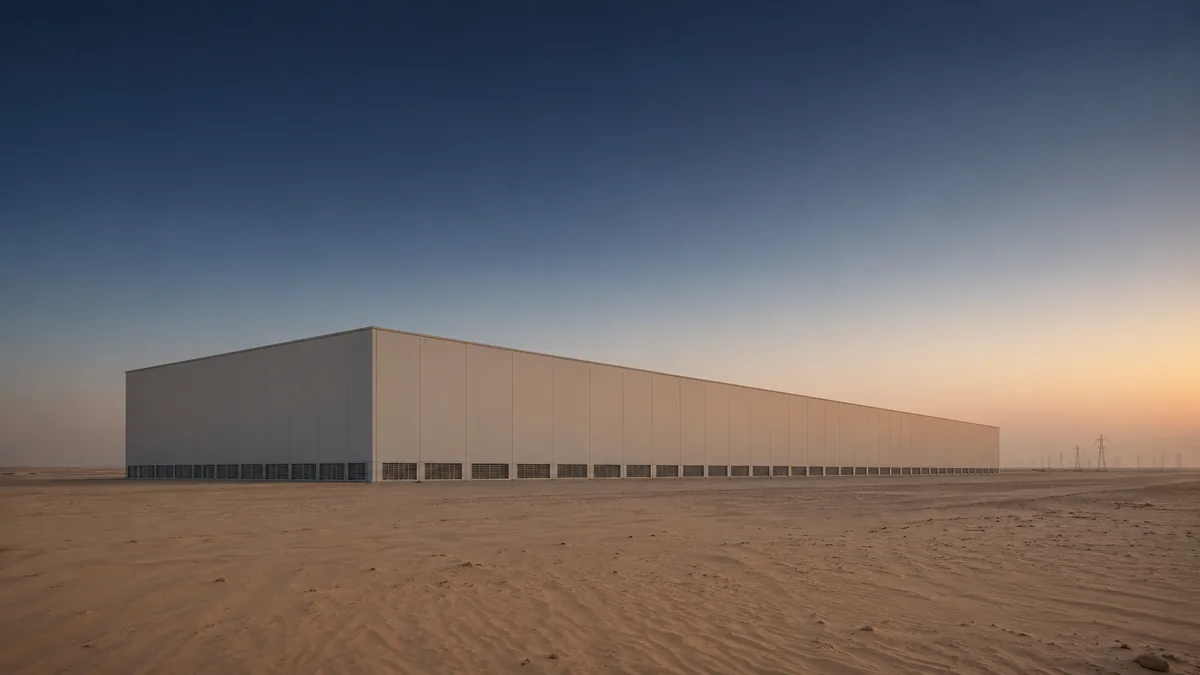
Sovereign-AI Infrastructure Roadmap for a Gulf Sovereign Wealth Fund
A strategy-research engagement that took a Gulf SWF from a thesis on sovereign-AI participation to a phased, three-year roadmap covering compute access, power siting, partnership architecture, and capital deployment.
May 2026
Market Intelligence
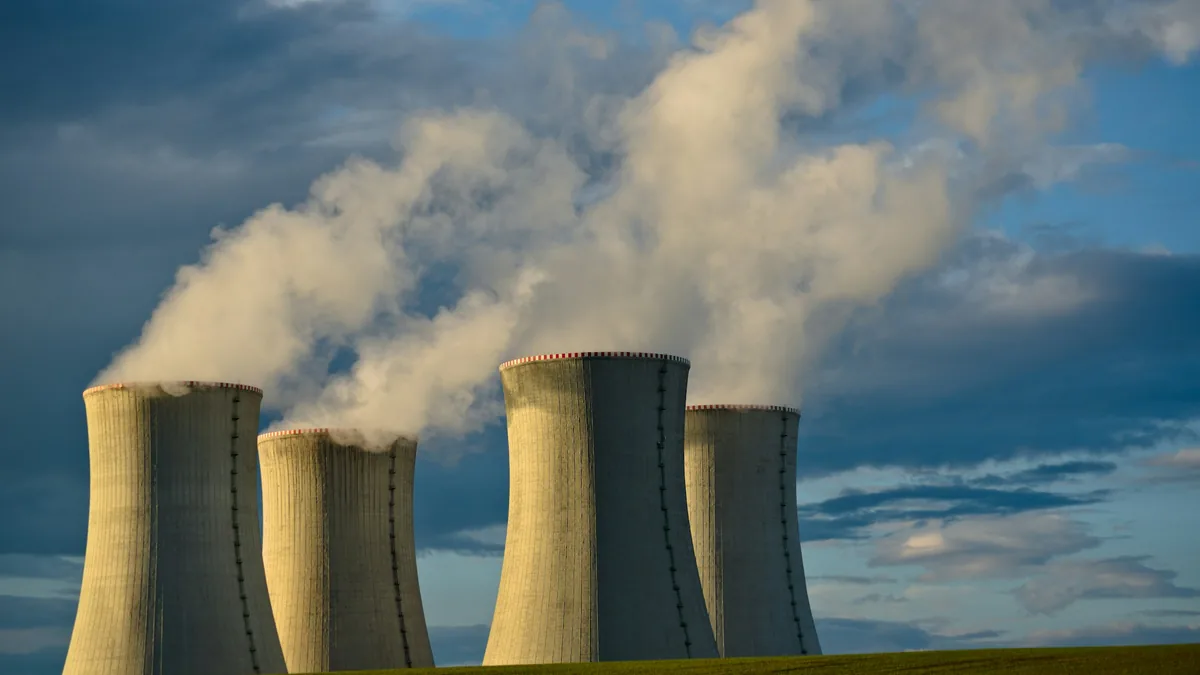
Global Small Modular Reactor (SMR) Market Outlook to 2035
The global SMR market grows from US$2.5 billion in 2024 to US$40 billion by 2035 at 30% CAGR, anchored by Microsoft-TMI restart, Amazon-X-energy, Google-Kairos PPAs, TerraPower Wyoming, and AI-data-centre power demand.
Apr 2026•6 min

Competitive Intelligence Review for a Mid-Market SaaS Platform Re-evaluating Its Positioning
A structured competitive intelligence review that reframed how a B2B SaaS platform positioned itself against incumbents and well-funded challengers ahead of a planning cycle.
Apr 2026