All Intelligence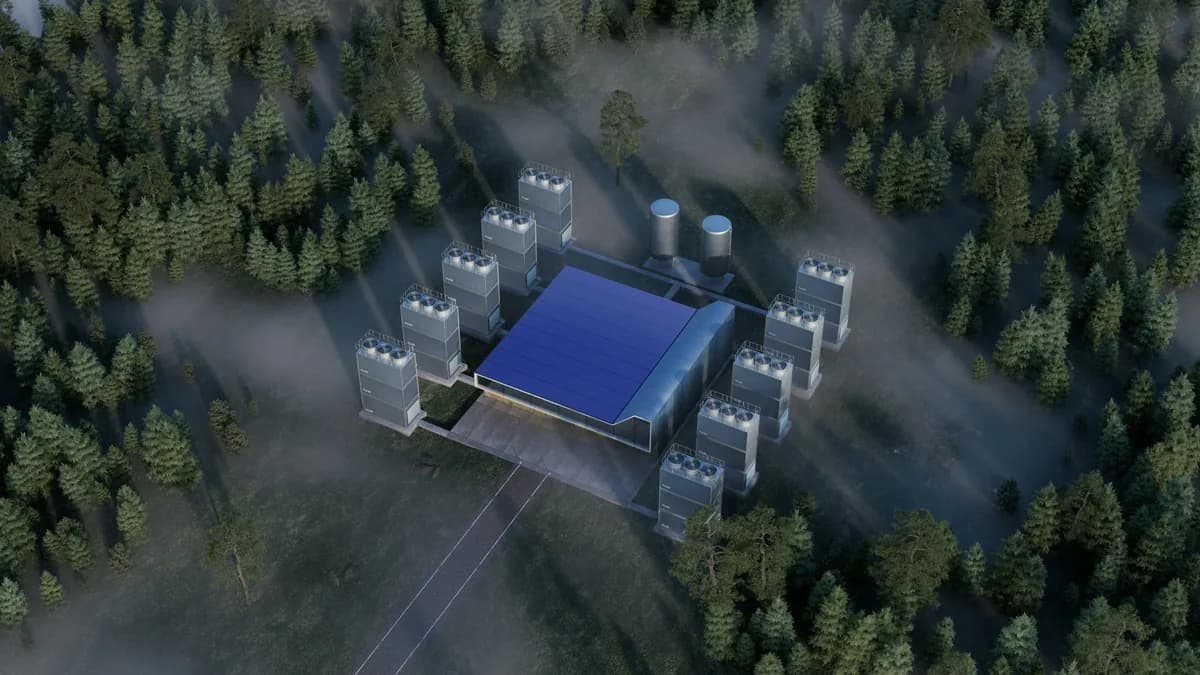
Market Size and CAGR by Period
Market IntelligencePublished February 9, 2026•Updated May 4, 2026•6 min
Global CCUS and Direct Air Capture Market Outlook to 2032
CCUS and DAC are forecast to grow from US$5 billion in 2024 to US$30 billion by 2032 (25% CAGR), driven by Stratos 2026 startup, Northern Lights Phase 2, EU CRCF, and 45Q US$180/tonne DAC credit.
Key Takeaways
- 01
CCUS and DAC grow from US$5 billion in 2024 to US$30 billion by 2032 at 25% CAGR, driven by Stratos startup, Northern Lights Phase 2, and 45Q tax credits.
- 02
45Q post-OBBBA pays US$85/tonne for industrial-storage and US$180/tonne for DAC-storage, creating structural economics favouring DAC build-out.
- 03
Stratos (1PointFive and Occidental, BlackRock JV) reaches Q2 2026 startup at 500,000 t/yr in the Permian, the world's largest DAC at startup.
- 04
Northern Lights Phase 2 FID in March 2025 expands capacity to over 5 Mt/yr by 2028; first CO₂ injected August 2025 with Heidelberg Materials anchor.
- 05
Project Bison's pause on clean-energy supply shows DAC scaling is power-dependent; low-carbon-power regions carry execution advantage.
Executive Summary
CCUS is moving from pilot scale to industrial scale, and DAC is converting tax credits into commercial offtake. The combined CCUS and DAC market grows from US$5 billion in 2024 to US$30 billion by 2032 at 25% CAGR, with operational capture capacity expanding from 50 Mt CO₂/year today toward 200-280 Mt by 2032 if announced projects deliver.
Three forces drive the trajectory. The IRA Section 45Q tax credit (modified by OBBBA in July 2025) pays US$85/tonne for industrial and power capture with permanent storage and US$180/tonne for DAC permanent storage; the differential creates structural economics favouring DAC within the broader CCUS landscape. Flagship projects are converting: Stratos (1PointFive and Occidental, BlackRock JV) reaches Q2 2026 startup at 500,000 t/yr; Northern Lights Phase 2 FID March 2025 expands to 5 Mt/yr by 2028; Heirloom's Louisiana 17,000 t/yr facility starts up 2026. And the EU Carbon Removal Certification Framework entered force December 26, 2024 with first methodologies adopted February 2026, creating a regulated removal-credit pathway.
Market Overview
CCUS captures CO₂ from industrial point sources (cement, steel, fertiliser, gas processing, hydrogen production, power generation) or directly from ambient air via DAC, then transports and stores it geologically or uses it in products. The IEA's Q1 2025 CCUS Projects Database shows 50 Mt/year operational capacity globally with a pipeline supporting 430 Mt of capture and 670 Mt of storage by 2030 if announced projects deliver.
The category sits at the intersection of three forces. Tax-credit policy (IRA 45Q post-OBBBA in the US, EU CRCF in Europe, equivalent frameworks in Korea, Japan, Norway) provides the demand-side underwrite. Buyer-side commitments from Big Tech (Microsoft alone contracted 68.4 Mt of removals in 2025) anchor early DAC offtake. And the binding constraint is shifting from FID to physical execution: power availability for DAC, Class VI permits for storage, pipeline rights-of-way for transport.
Geopolitically, CCUS is concentrated in jurisdictions with both industrial point-source emissions and storage geology: the US Gulf Coast and Permian, Norwegian Continental Shelf, UK North Sea, and Australian onshore basins dominate. China's CCUS deployment is rising fast on coal-power decarbonisation but operates outside Western removal-credit frameworks.
Market Size and Growth Outlook
Global CCUS and DAC Market Size
US$ billion, 2020-2032
| Label | Value (US$B) |
|---|---|
| 2020 | 1.5 US$B |
| 2022 | 3 US$B |
| 2024 | 5 US$B |
| 2026 | 8.5 US$B |
| 2028 | 14 US$B |
| 2030 | 22 US$B |
| 2032 | 30 US$B |
| Year | Market Size (US$B) | CAGR versus prior period |
|---|---|---|
| 2020 | 1.5 | — |
| 2022 | 3.0 | 41% |
| 2024 | 5.0 | 29% |
| 2026 | 8.5 | 30% |
| 2028 | 14.0 | 28% |
| 2030 | 22.0 | 25% |
| 2032 | 30.0 | 17% |
Source: Triangulated MarketsandMarkets, IEA CCUS Projects Database Q1 2025, BCC Research, named-operator disclosures.
The 2024-28 phase compounds at 28-30% as Stratos (Q2 2026), Northern Lights Phase 2 (2028), Heirloom Louisiana (2026-27), and DOE Regional DAC Hubs reach commercial operation. Growth moderates from 2030 onward as the easy point-source CCUS retrofits saturate and the next wave depends on harder-to-decarbonise industrial sectors (cement, steel) and DAC scale-up that is gated by clean-power availability.
Market Segmentation
By Capture Pathway
By Capture Pathway (2024 share of capacity)
- Industrial point-source (gas processing, hydrogen)48.0%
- Power generation (coal, gas, BECCS)22.0%
- Direct air capture (DAC)8.0%
- Cement and steel12.0%
- Other industrial (chemicals, fertiliser)10.0%
| Label | Value (%) |
|---|---|
| Industrial point-source (gas processing, hydrogen) | 48% |
| Power generation (coal, gas, BECCS) | 22% |
| Direct air capture (DAC) | 8% |
| Cement and steel | 12% |
| Other industrial (chemicals, fertiliser) | 10% |
DAC at 8% of 2024 capacity is the fastest-growing segment, expected to reach 22% by 2032 driven by 45Q US$180/tonne, Stratos, Heirloom Louisiana, and DOE Regional DAC Hubs (Project Cypress, South Texas DAC Hub). Cement and steel CCUS expand from 12% to 18% as carbon-border-adjustment frameworks (EU CBAM full implementation 2026) tighten incentive structures.
By Region
By Region (2024 cumulative project capacity share)
| Label | Value (%) |
|---|---|
| North America (Permian, Gulf Coast, Canada) | 48% |
| Europe (Norway, UK, Netherlands, EU) | 32% |
| Asia-Pacific (China, Australia, Japan) | 12% |
| Middle East (Saudi, UAE) | 5% |
| Other (Brazil, Africa) | 3% |
North America and Europe represent 80% of 2030-eligible capacity per IEA. The US dominates DAC build-out (Stratos, Heirloom Louisiana, Climeworks Mammoth-equivalent US projects) while Europe leads on geological storage (Northern Lights, Porthos, Aramis) and transboundary CO₂ shipping. Asia-Pacific is led by China's coal-power CCUS and Australia's CCS Hub Program.
By Buyer Cohort
By Offtake Buyer (2025 DAC offtake commitments)
- Microsoft42.0%
- Other Big Tech (Google, Meta, Amazon, Apple)22.0%
- Aviation and maritime14.0%
- Financial services and asset managers11.0%
- Industrial corporates and other11.0%
| Label | Value (%) |
|---|---|
| Microsoft | 42% |
| Other Big Tech (Google, Meta, Amazon, Apple) | 22% |
| Aviation and maritime | 14% |
| Financial services and asset managers | 11% |
| Industrial corporates and other | 11% |
Big Tech together accounts for 64% of 2025 DAC offtake commitments. Microsoft alone is at 42%. The Symbiosis Coalition adds Google, Meta, and Salesforce as nature-based removal anchors but the engineered DAC offtake remains Microsoft-dominated. The implication is that DAC project economics depend disproportionately on hyperscaler buyer signatures.
Trends and Developments
Stratos and the Permian DAC cluster
Stratos (1PointFive, Occidental subsidiary; BlackRock JV) reaches Q2 2026 startup at 500,000 t/yr capacity, the world's largest single DAC plant at startup. Class VI well permits secured. Offtake includes Microsoft, Airbus, Amazon, AT&T, and Bain and Company, the same Big Tech voluntary-carbon-market buyer cohort that anchors durable-removal demand more broadly. Total project capex approximately US$1.3 billion. The Permian's combination of grid renewables, geological storage, and existing CO₂ infrastructure makes it the canonical first-wave DAC location.
Northern Lights Phase 2 and European storage scale
Northern Lights (TotalEnergies, Equinor, Shell) reached Phase 2 FID in March 2025, expanding capacity from 1.5 to over 5 Mt/yr by 2028 with NOK 7.5 billion (US$700 million) investment. First CO₂ was injected and stored August 2025 with Heidelberg Materials' Brevik cement plant as anchor customer. The project demonstrates Norwegian Continental Shelf storage at industrial scale and underwrites the EU's broader storage build-out (Porthos, Aramis).
45Q post-OBBBA economics reshape DAC investment
The Inflation Reduction Act Section 45Q, modified by the One Big Beautiful Bill Act in July 2025, pays US$85/tonne for industrial and power capture (permanent storage), US$180/tonne for DAC permanent storage, US$130/tonne for DAC utilisation, and US$60/tonne for EOR/utilisation, all with prevailing-wage and apprenticeship requirements. The DAC differential creates structural economics that explain the Permian-Iceland-Louisiana cluster.
Other relevant developments include EU CRCF first methodologies adopted February 2026, DOE Regional DAC Hubs progressing through milestone gates (Project Cypress, South Texas DAC Hub), Climeworks DOE megaton hub selections, and Project Bison's pause as the cautionary case demonstrating that DAC scaling is power-dependent rather than capex-dependent alone.
Competitive Landscape
Top CCUS and DAC Operators (2024 capacity share)
| Label | Value (%) |
|---|---|
| Equinor / Shell / TotalEnergies (Northern Lights) | 18% |
| Occidental / 1PointFive | 14% |
| ExxonMobil (Texas, LaBarge) | 11% |
| Climeworks | 6% |
| Heirloom | 5% |
| Aramco and Chinese SOEs | 12% |
| Other (Air Liquide, Linde, Mitsubishi, others) | 34% |
The Northern Lights consortium is the largest single project anchor through 2028. Occidental and 1PointFive lead DAC at scale via Stratos. ExxonMobil operates the largest US gas-processing CCS portfolio. Climeworks Mammoth (36,000 t/yr commissioned May 2024) and Heirloom Louisiana (17,000 t/yr first facility starting 2026, 300,000 t/yr second facility starting 100,000 by 2027) anchor the Iceland and Louisiana DAC clusters. Chinese SOE deployment is rising fast on coal-power but operates outside Western removal-credit frameworks.
Key Policies and Regulatory Environment
IRA Section 45Q (post-OBBBA July 2025)
The Inflation Reduction Act Section 45Q tax credit, as modified by the One Big Beautiful Bill Act in July 2025, pays US$85/tonne for industrial and power capture (permanent storage), US$180/tonne for DAC permanent storage, US$130/tonne for DAC utilisation, and US$60/tonne for EOR/utilisation. The credit is direct-pay-eligible, has 12-year claim duration from project commissioning, and requires prevailing-wage and apprenticeship for full value. This is the binding US economic framework.
EU Carbon Removal Certification Framework (CRCF)
The EU CRCF entered force December 26, 2024, with first methodologies adopted February 2026 (carbon farming, durable removals). The framework establishes a Union-wide registry by 2028 and creates a regulated pathway for selling certified removals into the EU emissions trading system and corporate net-zero claims. Combined with EU NZIA's 50 Mt/yr 2030 storage target, the framework provides Europe with policy parity to US 45Q.
Other relevant frameworks include DOE Regional DAC Hubs (US$3.5 billion programme allocating to South Texas DAC Hub, Project Cypress, others), DOE Class VI permitting reforms streamlining well approval, the UK CCUS Cluster Sequencing Programme (Track-1 and Track-2 clusters), Australia's CCS Hubs Program, and Norway's Longship/Northern Lights co-funding model.
Future Outlook
The CCUS and DAC market in 2032 reaches approximately US$30 billion in annual value with operational capture capacity of 200-280 Mt CO₂/year (versus 50 Mt today). DAC capacity grows from approximately 0.05 Mt today to 8-12 Mt by 2032 if Stratos, Heirloom, Climeworks, and DOE-hub-anchored projects deliver on schedule.
The competitive landscape consolidates around a handful of integrated platforms: Occidental and 1PointFive in DAC; the Northern Lights consortium and Aramis in European storage; ExxonMobil and Aramco in industrial-scale point-source. Mid-tier operators face strategic squeeze as Class VI permitting and clean-power-allocation favour scaled players.
The biggest risk is power-availability constraint for DAC. Project Bison's pause demonstrated that DAC scaling is power-dependent rather than capex-dependent, the same dynamic that gates green-hydrogen FIDs since both pull from the same clean-power supply pool. The leading indicator is the trajectory of clean-power PPAs at proposed DAC sites and the success rate of the next 4-6 first-of-a-kind DAC FIDs through 2027.
Decision implications
- Industrial corporates with point-source emissions
Sequence CCUS retrofits to capture 45Q before construction-start deadline of 2033 (under current law). Anchor offtake with Big Tech CDR buyers where DAC adjacency is plausible.
- DAC project developers
Lock clean-power PPAs and Class VI permits 24-36 months ahead of FID. Project Bison demonstrated power-dependence as the binding constraint, not capex.
- Investors and infrastructure capital
Returns concentrate in operators with multi-modal capability (DAC, storage, and transport). Pure-play DAC technology vendors face commoditisation; integrated infrastructure capture margin.
Frequently Asked Questions
Approximately US$5 billion globally in 2024, with 50 Mt/year of operational capture capacity per the IEA Q1 2025 CCUS Projects Database. The 2026 forecast is approximately US$8.5 billion as Stratos, Heirloom Louisiana, and Northern Lights Phase 2 reach commercial operations.
A CAGR of 25%, reaching US$30 billion by 2032 in our base case. Operational capacity scales to 200-280 Mt/year if announced projects deliver, with DAC capacity reaching 8-12 Mt versus approximately 0.05 Mt today.
The post-OBBBA 45Q rate of US$180/tonne for DAC permanent storage versus US$85/tonne for industrial capture creates a structural economic differential. The higher DAC rate, 12-year claim duration, and direct-pay-eligibility makes DAC project economics attractive even at current US$400-700/tonne early-offtake pricing.
The Northern Lights consortium (Equinor, Shell, TotalEnergies, 18% capacity share) leads European storage. Occidental and 1PointFive (14%) lead DAC at scale via Stratos. ExxonMobil (11%) operates the largest US gas-processing CCS portfolio. Climeworks (6%) and Heirloom (5%) anchor the Iceland and Louisiana DAC clusters.
DAC power-availability constraints. Project Bison (CarbonCapture Inc.) was paused due to inability to secure sufficient clean-energy supply, demonstrating that DAC scaling is power-dependent. The leading indicator is clean-power PPA execution at proposed DAC sites through 2026-27.
About Stratpace Advisory
Stratpace Advisory is a new-age market research and strategic advisory firm. Our work supports founders, executives, and investment teams making high-stakes decisions across energy, healthcare, technology, and sustainability. We build from primary research, competitive intelligence, and structured analysis – evidence over opinion.
Further Reading
Market Intelligence
Global Sustainable Aviation Fuel (SAF) Market Outlook to 2032
Global SAF supply grows from 1.5 Mt in 2024 to 22 Mt by 2032 (35% CAGR) as ReFuelEU, the UK SAF Mandate, and US 45Z reshape demand. Feedstock and e-SAF capex constraints will gate compliance through 2028.
Jan 2026•6 min
Market Intelligence
Global Voluntary Carbon Market Outlook to 2032
The voluntary carbon market is forecast to grow from US$1.4B in 2024 to US$22B by 2032 (40% CAGR), driven by ICVCM CCP integrity-tier convergence, CORSIA Phase 2 from 2027, and Big Tech CDR offtake.
May 2026•6 min
Market Intelligence
Global Green Hydrogen Market Outlook to 2032
The global green hydrogen market is forecast to grow from US$8 billion in 2024 to US$70 billion by 2032 at 31% CAGR, anchored by NEOM 2027 startup, IRA 45V final rules, and EU REPowerEU 10 Mt domestic and 10 Mt import targets for 2030.
Apr 2026•6 min
Market Intelligence
Global Grid-Scale Battery Storage (BESS) Market Outlook to 2032
The global grid-scale BESS market grows from US$13 billion in 2024 to US$135 billion by 2032 at 33% CAGR, anchored by ERCOT 14 GW, CAISO 17 GW, Tesla and Sungrow leadership, and IRA 45X battery cell credit.
May 2026•6 min
Market Intelligence
Global Small Modular Reactor (SMR) Market Outlook to 2035
The global SMR market grows from US$2.5 billion in 2024 to US$40 billion by 2035 at 30% CAGR, anchored by Microsoft-TMI restart, Amazon-X-energy, Google-Kairos PPAs, TerraPower Wyoming, and AI-data-centre power demand.
Apr 2026•6 min
Durable Carbon-Removal Portfolio Strategy for a Hyperscaler Sustainability Team
A sector-intelligence engagement that converted a hyperscaler's CDR offtake exposure from a single-pathway concentration into a diversified, integrity-tiered portfolio sized to 2030 net-zero commitments.
Apr 2026