All Intelligence
Market Size and CAGR by Period
Market IntelligencePublished May 4, 2026•Updated May 15, 2026•6 min
Global Voluntary Carbon Market Outlook to 2032
The voluntary carbon market is forecast to grow from US$1.4B in 2024 to US$22B by 2032 (40% CAGR), driven by ICVCM CCP integrity-tier convergence, CORSIA Phase 2 from 2027, and Big Tech CDR offtake.
Key Takeaways
- 01
VCM grows from US$1.4B in 2024 to US$22B by 2032 at 40% CAGR, driven by integrity-tier convergence, CORSIA Phase 2, and Big Tech CDR offtake.
- 02
ICVCM has approved 8 carbon-crediting programs and 38 methodologies; CCP-labelled credits command a 25% price premium over unlabelled.
- 03
CORSIA Phase 2 from January 2027 creates the first regulated VCM demand floor; mandatory participation by all ICAO states except LDC/SIDS/LLDC.
- 04
Microsoft contracted approximately 68.4 Mt of carbon removals in 2025 versus 5.1 Mt in 2024, accounting for over 90% of H1 2025 global CDR offtake.
- 05
Pricing has bifurcated structurally; A-AAA credits at US$14.80/tonne versus CCC-B at US$3.50/tonne, with tech CDR in a separate tier (DAC US$400-700/tonne).
Executive Summary
The voluntary carbon market is moving from integrity crisis to mandate-aligned expansion. Market value grows from US$1.4 billion in 2024 to US$22 billion by 2032 at 40% CAGR, with retirements scaling from 182 MtCO₂e in 2024 toward over 1,000 MtCO₂e by 2032 as CORSIA Phase 2 binds and Big Tech demand compounds.
Three forces drive the trajectory. The ICVCM Core Carbon Principles framework now covers 8 approved programs and 38 methodologies, with CCP-labelled credits at approximately 51 million units commanding a 25% price premium over unlabelled. CORSIA Phase 2 (mandatory January 2027) creates the first regulated demand floor in the market's history. And Microsoft's 2025 carbon removal contracting reached 68.4 Mt versus 5.1 Mt in 2024, alongside the Symbiosis Coalition (Google, Meta, Microsoft, Salesforce) committing up to 20 Mt of nature-based removals by 2030.
Market Overview
The VCM is the trade in carbon credits where each credit represents one tonne of CO₂ either reduced (avoided emissions, primarily forestry and renewable energy) or removed (durable storage, primarily nature-based and engineered DAC). Buyers are corporates and obligated sectors using credits for net-zero commitments, regulated compliance (CORSIA), or insetting against value-chain emissions.
The category has been through an integrity reset in 2023-25 driven by methodology challenges in REDD+ and renewable-energy crediting. The reset is structural, not cyclical. ICVCM Core Carbon Principles, VCMI Claims Code v3 (April 2025, mandatory CCP and Article 6.4 alignment from January 2026), and EU CRCF (in force December 26, 2024) are converging into a single integrity stack that defines what high-quality looks like. The market that emerges in 2027 onward is smaller than 2022 hype-cycle forecasts but materially higher quality and higher unit price.
Geopolitically, Article 6.4 (the UN Paris Agreement crediting framework) provides cross-border coordination but national implementations diverge. The US-EU regulatory convergence on durable removals contrasts with looser frameworks elsewhere. CORSIA Phase 2 implementation depends on host-state Letters of Authorisation that are still being negotiated.
Market Size and Growth Outlook
Global Voluntary Carbon Market Size
US$ billion, 2020-2032
| Label | Value (US$B) |
|---|---|
| 2020 | 0.5 US$B |
| 2022 | 2 US$B |
| 2024 | 1.4 US$B |
| 2026 | 3.5 US$B |
| 2028 | 8 US$B |
| 2030 | 14 US$B |
| 2032 | 22 US$B |
| Year | Market Size (US$B) | CAGR vs prior period |
|---|---|---|
| 2020 | 0.5 | — |
| 2022 | 2.0 | 100% |
| 2024 | 1.4 | -16% |
| 2026 | 3.5 | 58% |
| 2028 | 8.0 | 51% |
| 2030 | 14.0 | 32% |
| 2032 | 22.0 | 25% |
Source: Triangulated Ecosystem Marketplace SOVCM 2025, ICVCM CCP impact data, Big Tech CDR offtake disclosures.
The 2022-24 contraction reflects the integrity reset, not category collapse. From 2025 onward growth is anchored on three structural pillars: CCP-labelled supply scaling at premium pricing (~25% premium today, expected to widen to 40-50% by 2027), tech CDR offtake compounding (DAC at US$400-700/tonne for early offtake, biochar at US$187/tonne, enhanced weathering at US$349/tonne), and CORSIA Phase 2 demand entering force in January 2027.
Market Segmentation
By Project Type
By Project Type (2024 share of value)
- Forestry and land use (REDD+, ARR)38.0%
- Renewable energy18.0%
- Tech CDR (DAC, biochar, ERW)14.0%
- Cookstoves and household devices12.0%
- Other (waste, industrial, blue carbon)18.0%
| Label | Value (%) |
|---|---|
| Forestry and land use (REDD+, ARR) | 38% |
| Renewable energy | 18% |
| Tech CDR (DAC, biochar, ERW) | 14% |
| Cookstoves and household devices | 12% |
| Other (waste, industrial, blue carbon) | 18% |
Tech CDR is the fastest-growing segment, expanding from 14% of 2024 value to an expected 38% by 2032 as DAC offtake compounds. Forestry compresses from 38% to 28% as REDD+ methodology challenges constrain near-term supply. Renewable-energy crediting structurally declines toward niche use as additionality becomes harder to demonstrate post-2025.
By Buyer Cohort
By Buyer Cohort (2025 retirements)
- Big Tech (Microsoft, Google, Meta, Salesforce)42.0%
- Other corporate net-zero28.0%
- Aviation (CORSIA First Phase voluntary)12.0%
- Financial services and asset managers10.0%
- Other (consumer, industrial, public)8.0%
| Label | Value (%) |
|---|---|
| Big Tech (Microsoft, Google, Meta, Salesforce) | 42% |
| Other corporate net-zero | 28% |
| Aviation (CORSIA First Phase voluntary) | 12% |
| Financial services and asset managers | 10% |
| Other (consumer, industrial, public) | 8% |
Big Tech at 42% is concentrated to a degree no other VCM segment has previously seen. Microsoft alone retired 56.3 Mt in H1 2025, approximately 91% of global H1 CDR offtake. The Symbiosis Coalition formalises the cluster, committing up to 20 Mt nature-based by 2030. The implication is that VCM supply economics are increasingly shaped by 4-5 buyer signatures rather than diversified corporate demand.
By Region
By Supply Region (2024 share)
| Label | Value (%) |
|---|---|
| Latin America (forestry-led) | 32% |
| Africa (REDD+, cookstoves) | 24% |
| Southeast Asia (REDD+, blue carbon) | 16% |
| North America (DAC, biochar, ERW) | 14% |
| Europe (CRCF-pilot, biochar) | 8% |
| Other (Middle East, Australia) | 6% |
Tropical-forestry geographies dominate supply but face the steepest integrity-driven supply contraction. Tech CDR supply compounds in North America (DAC build-out led by 1PointFive Stratos, Climeworks Mammoth, Heirloom Louisiana) and Europe (CRCF-certified pilots).
Trends and Developments
Integrity-tier convergence under ICVCM and VCMI
The ICVCM Core Carbon Principles framework now covers 8 approved programs (ACR, ART, CAR, Gold Standard, Verra, plus three others as of November 2025) and 38 approved methodologies. Approximately 51 million CCP-labelled credits sit in market, representing 4% of 2024 retirements but commanding a 25% price premium. VCMI Claims Code v3 (April 2025) aligns corporate use of credits with CCP and Article 6.4 from January 2026, making the ICVCM-VCMI stack the de facto integrity standard for net-zero claims.
Big Tech CDR offtake reshapes demand
Microsoft's 2025 contracting reached 68.4 Mt, a 13× increase versus 2024. The Symbiosis Coalition (Google plus Meta plus Microsoft plus Salesforce, May 2025) committed up to 20 Mt of nature-based removals by 2030. This concentration is structurally favourable for tech CDR project economics (DAC, biochar, ERW) and structurally unfavourable for diversified-buyer-base methodology investments.
CORSIA Phase 2 as the first regulated demand floor
CORSIA Phase 2 becomes mandatory January 2027 for all ICAO states except Least Developed Countries, Small Island Developing States, and Land-Locked Developing Countries plus those under 0.5% of global Revenue Tonne-Kilometres. IATA projects First Phase (2024-26) Eligible Emissions Unit demand at 146-236 Mt; mandatory Phase 2 demand will be materially larger as airline obligations cumulate annually. CORSIA-driven offset demand also competes with airline procurement of sustainable aviation fuel, which is the substitutional decarbonisation lever for the same compliance obligation.
Other relevant developments include the EU CRCF first methodologies adopted February 2026 (carbon farming, durable removals), the SBTi residual emissions debate reshaping corporate net-zero claims, and Microsoft's Q1 2025 brief pause on new offtake (subsequently resumed) which triggered a market-wide repricing event.
Competitive Landscape
Top Standards and Methodology Programs (2024 retirement share)
| Label | Value (%) |
|---|---|
| Verra (VCS) | 58% |
| Gold Standard | 14% |
| American Carbon Registry (ACR) | 9% |
| Climate Action Reserve (CAR) | 7% |
| Architecture for REDD+ Transactions (ART) | 5% |
| Other registries | 7% |
Verra dominates retirement volume at 58% but faces the steepest integrity scrutiny on its REDD+ methodology portfolio. Gold Standard's smaller and more curated portfolio captured disproportionate quality-tier growth in 2024-25. ART (Architecture for REDD+ Transactions) is the leading CCP-aligned jurisdictional REDD+ standard, anchoring the integrity-tier supply story. On the project-developer side, top operators include Pachama, Sylvera, BeZero (rating side); 1PointFive, Climeworks, Heirloom (engineered removals); and consortium-led programmes like LEAF Coalition.
Key Policies and Regulatory Environment
ICVCM Core Carbon Principles framework
ICVCM publishes the CCP framework as the integrity benchmark for VCM credits. As of November 2025, 8 carbon-crediting programs are CCP-Eligible and 38 methodologies are CCP-approved. CCP-labelled credits trade at a 25% premium versus unlabelled. The framework is the binding integrity standard for buyers' net-zero claims and is increasingly the prerequisite for entering CORSIA-eligible supply.
VCMI Claims Code v3
Voluntary Carbon Markets Integrity Initiative published Claims Code v3 in April 2025. The Code requires corporate buyers using credits to disclose Scope 1, 2, and 3 emissions, set near-term targets aligned with 1.5°C, and use only CCP-labelled or Article 6.4-authorised credits from January 1, 2026. VCMI compliance is the binding standard for corporate net-zero claims credibility.
Other relevant frameworks include CORSIA Phase 2 (mandatory January 2027), Article 6.4 of the Paris Agreement (UN supervisory body issued first methodologies 2025), the EU Carbon Removal Certification Framework (in force December 26, 2024, first methodologies February 2026), and the SBTi Beyond Value Chain Mitigation guidance reshaping corporate use of credits in net-zero pathways.
Future Outlook
The VCM in 2032 is approximately US$22 billion in annual value with retirements over 1,000 MtCO₂e. Tech CDR captures 38% of value (up from 14% in 2024). CCP-labelled credits become the default with the price premium widening from 25% to 40-50% by 2030. CORSIA Phase 2 demand contributes 200-400 Mt annually by 2030 depending on airline compliance pathways.
The competitive landscape consolidates at the integrity-tier layer: ART, Gold Standard, and CCP-aligned Verra methodologies capture the bulk of premium volume. Tech CDR project developers compound on offtake commitments from Microsoft, Google, Meta, Salesforce, and the broader hyperscaler cohort.
The biggest risk is buyer-side concentration. With Big Tech at 42% of 2025 retirements, a single-buyer pause or strategic pivot (as Microsoft briefly demonstrated in early 2025) creates market-wide repricing risk. The leading indicator is hyperscaler quarterly carbon-budget disclosures and the trajectory of removal-vs-reduction balance in their offtake portfolios.
Decision implications
- Corporate net-zero teams
Default to CCP-labelled supply from January 2026 to align with VCMI Claims Code v3. Build CDR portfolio with 30-50% durable removal allocation; allocate budget at the higher tech CDR price tier.
- Carbon project developers
Pursue CCP eligibility from day one; non-CCP supply faces structural price compression. Tech CDR developers should lock multi-year offtake with hyperscaler buyers before competition intensifies post-2027.
- Policymakers and standards bodies
Article 6.4 implementation pace determines whether CORSIA Phase 2 demand can be met domestically or requires cross-border crediting. Host-state Letter of Authorisation processes are the binding bottleneck.
Frequently Asked Questions
What is the current size of the voluntary carbon market? Approximately US$1.4 billion in 2024 with 182 MtCO₂e retired across the top ten standards. Retirements held to approximately 202 MtCO₂e in 2025 with a meaningful quality-tier shift but flat aggregate volume.
What is the expected growth rate through 2032? A CAGR of 40%, reaching US$22 billion by 2032 in our base case. Retirements scale from 182 Mt in 2024 to over 1,000 Mt by 2032 as CORSIA Phase 2 demand and tech CDR offtake compound.
Why are CCP-labelled credits trading at a premium? The ICVCM Core Carbon Principles framework provides the only multi-buyer-recognised integrity benchmark. With 8 approved programs and 38 approved methodologies as of November 2025, CCP-labelled supply is approximately 51 million credits or 4% of 2024 volume. The premium averages 25% and is expected to widen to 40-50% by 2030.
Who is driving demand? Big Tech accounts for approximately 42% of 2025 retirements. Microsoft contracted 68.4 Mt in 2025 (versus 5.1 Mt in 2024). The Symbiosis Coalition (Google, Meta, Microsoft, Salesforce, May 2025) committed up to 20 Mt nature-based removals by 2030. CORSIA Phase 2 from January 2027 adds the first regulated demand floor.
What is the biggest risk to the outlook? Buyer concentration at the hyperscaler layer. A pause or pivot from a single major buyer creates market-wide repricing risk. Microsoft's brief Q1 2025 pause on new offtake demonstrated the failure mode; the recovery was rapid but the volatility is structural.
About Stratpace Advisory
Stratpace Advisory is a new-age market research and strategic advisory firm. Our work supports founders, executives, and investment teams making high-stakes decisions across energy, healthcare, technology, and sustainability. We build from primary research, competitive intelligence, and structured analysis – evidence over opinion.
Further Reading
Market Intelligence
Global Sustainable Aviation Fuel (SAF) Market Outlook to 2032
Global SAF supply grows from 1.5 Mt in 2024 to 22 Mt by 2032 (35% CAGR) as ReFuelEU, the UK SAF Mandate, and US 45Z reshape demand. Feedstock and e-SAF capex constraints will gate compliance through 2028.
Jan 2026•6 min
Market Intelligence
Global Green Hydrogen Market Outlook to 2032
The global green hydrogen market is forecast to grow from US$8 billion in 2024 to US$70 billion by 2032 at 31% CAGR, anchored by NEOM 2027 startup, IRA 45V final rules, and EU REPowerEU 10 Mt domestic and 10 Mt import targets for 2030.
Apr 2026•6 min
Market Intelligence
Global CCUS and Direct Air Capture Market Outlook to 2032
CCUS and DAC are forecast to grow from US$5 billion in 2024 to US$30 billion by 2032 (25% CAGR), driven by Stratos 2026 startup, Northern Lights Phase 2, EU CRCF, and 45Q US$180/tonne DAC credit.
Feb 2026•6 min
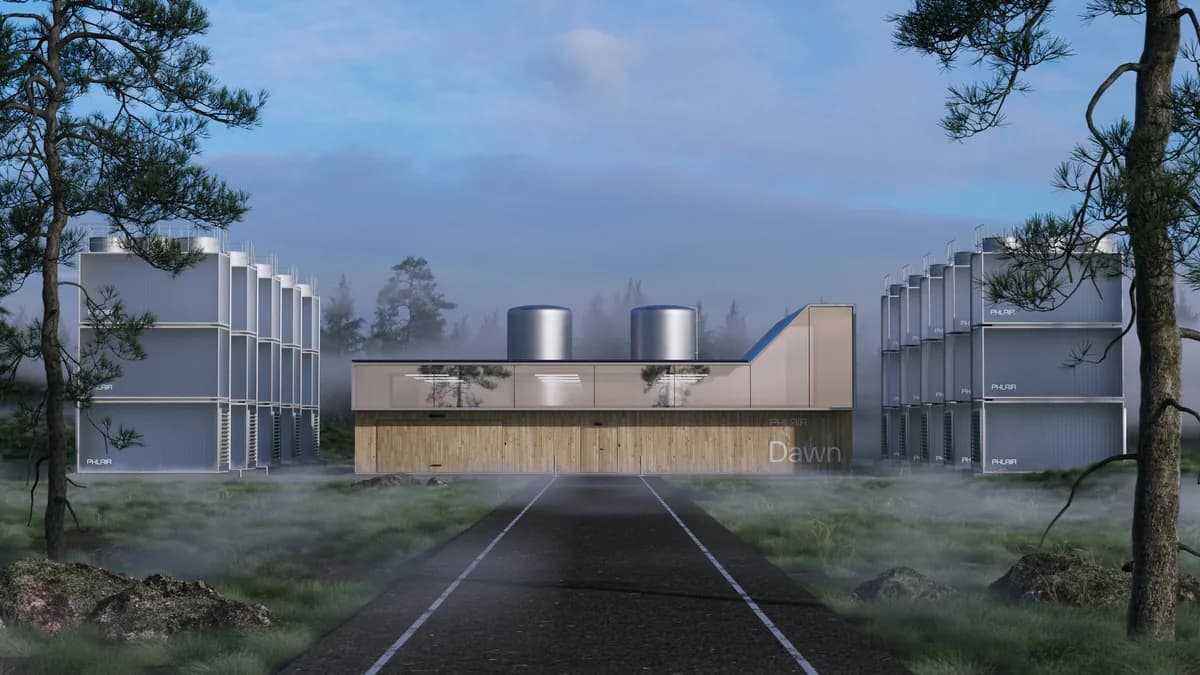
Durable Carbon-Removal Portfolio Strategy for a Hyperscaler Sustainability Team
A sector-intelligence engagement that converted a hyperscaler's CDR offtake exposure from a single-pathway concentration into a diversified, integrity-tiered portfolio sized to 2030 net-zero commitments.
Apr 2026
Market Intelligence
Global Cell and Gene Therapy CDMO Market Outlook to 2032
The global cell and gene therapy CDMO market grows from US$7 billion in 2024 to US$50 billion by 2032 at 28% CAGR, driven by more than 30 approved CGTs, BIOSECURE-induced decoupling, and Novo Holdings-Catalent reshaping capacity.
Mar 2026•6 min
Market Intelligence
Global Grid-Scale Battery Storage (BESS) Market Outlook to 2032
The global grid-scale BESS market grows from US$13 billion in 2024 to US$135 billion by 2032 at 33% CAGR, anchored by ERCOT 14 GW, CAISO 17 GW, Tesla and Sungrow leadership, and IRA 45X battery cell credit.
May 2026•6 min